


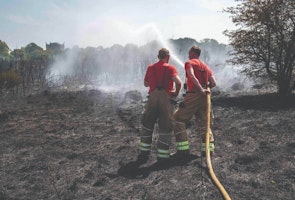
Seven in 10 Londoners lost sleep in this summer's heatwaves and two-thirds say the city is not ready for the next. Our exclusive Survation poll reveals all.
Climate change and conflict: the link we can't ignore
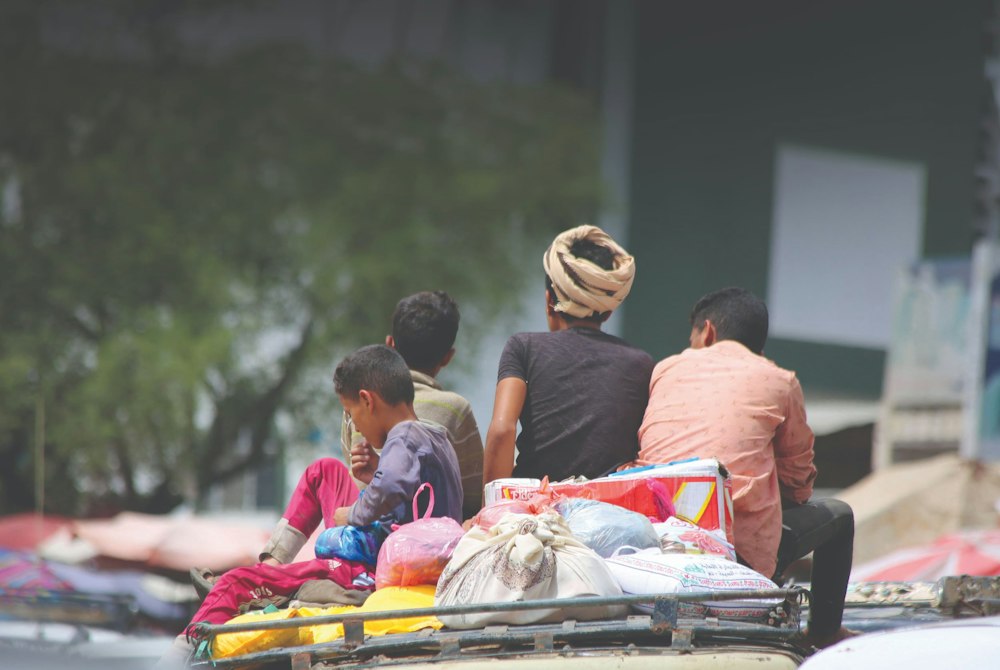
The 'worst ever' COP ended in deadlock. But climate change is also fuelling conflict, unrest and mass migration – a triple threat our leaders refuse to debate.
The climate movement suffered a major setback at this month's COP summit – a total lack of agreement that threatens a future of rising seas and impossible temperatures.
Coupled with that is another risk: the increase of climate-related conflict that is often under-reported and under-played.
Ranked the "worst ever" COP, this year's summit in Turkey has left many disheartened. Before it even began it had been labelled the "overshoot summit", because it was the first COP since the UN's assessment that the world is heading beyond the Paris Agreement's limit of 1.5C above pre-industrial levels.
I was in Paris at that 2015 summit and I remember the excitement. Even though many feared that a limit of 1.5C didn't go far enough, at least there was agreement on the way forward. We now know the rise will be considerably higher, and with no agreement.
Eleven years on, it's hard to believe the United States is in the second term of a Hoaxer-in-Chief who ridicules climate science and boycotts climate summits, and that Saudi Arabia and Russia would succeed in blocking any reference at all to the need for a transition away from fossil fuels.
Yes, the denialists seem to be winning right now, and much of our press is pumping out disinformation. Climate denialism has shifted from baldly claiming that global heating is not happening, to saying there is little we can do, so why bother to try, given net zero's alleged economic disadvantages for Britain.
But it is essential that the climate movement, together with a wide coalition of environmental and human rights groups, does not lose heart and roll over in frustration.
Or, just as importantly, not become more "extreme" in our analysis, recommendations and tactics, and thereby both alienate the middle ground and benefit the far right. But we also need to recognise that the climate crisis is linked to other global developments: the rise in conflict and a worldwide push-back against human rights and international law.
One little-covered aspect of climate change is how connected it is to conflict. There are estimated to be more ongoing armed conflicts now than at any time since 1945. Some of the biggest (Russia's invasion of Ukraine; Israel in Gaza and Lebanon; the US-Israeli war on Iran) have causes unrelated to climate, but they all contribute to emissions and to a harsher diplomatic atmosphere within which climate measures, and so much else, fail.
But the contemporary conflict that has caused the most casualties – the one ravaging Sudan – is intimately connected to climate, as are those in Mali, Somalia and Yemen.
Drought and desertification have increased competition for ever-dwindling water supplies and fertile land. Nomadic pastoralists have come into conflict with farmers, as they feel forced to bring their herds of camels, cattle and goats on to tilled farmland.
Few now deny the increasing salience of climate stress as a factor in exacerbating and prolonging conflict.
In 2023, the head of the CIA declared that climate change is the quintessential 'threat multiplier' – fuelling energy, health, water and food insecurities, setting back progress on economic and human development, "turbocharging what is already the worst period of forced displacement and migration in history, and further exacerbating instability and geopolitical tensions and flash points".
Since taking over as Foreign Secretary, Ed Miliband has shone a light on some of these matters. So has Prime Minister Andy Burnham, who at COP31 described climate change as a security issue.
Appointing the world's first Special Representative for Climate Security, the UK is underlining that climate change is already disrupting food systems and undermining energy security, as set out in the leaked Joint Intelligence Committee assessment this year.
What is even more rarely talked about, though, is that it is not just climate change itself that is a growing driver of conflict. It is the actions we take to mitigate it. In the richer countries of the global north, the whole set of issues relating to "net zero wokeness" and the "climate hoax" is being used in culture wars to divide societies and electorates. Both the Conservatives and Reform are gearing up to make this a major issue at the next UK general election.
So far, this has remained largely non-violent, although the gilets jaunes (yellow vests) protests in France in 2018 – whipped up by the belief that "metropolitan elites" were discriminating against rural voters by raising fuel taxes to reduce carbon emissions – show how conflict can develop.
A far more serious threat to peace and stability is likely to come from countries that overwhelmingly depend on oil revenues for their budgets, security and social services. Iraq, Libya and Nigeria are three examples. As the world is gradually weaned off oil and into renewable energy, countries such as these will find their once assured revenue is curtailed.
There is a pressing need for oil-producing states to diversify their economies, otherwise extremist movements such as Boko Haram, al-Qaeda and Islamic State will profit from the resulting deprivation and lawlessness.
So climate change poses a triple threat to security. First, there's the direct threat to peace and development. Second, the actions we take to combat climate change are also serving to fuel conflict. Third – and probably hottest of all – there is climate migration.
It seems almost inevitable that tens of millions of people will feel compelled to leave their homes because their lands are uninhabitable as a result of floods, droughts, heat waves, and rising seas. These climate refugees are being forced to move not through any misdeeds of their own countries, but because of greenhouse gas emissions caused by far more developed countries that bring misery to them.
There are thus two major trends likely to intensify. On the one hand, we see within richer societies a militant growing reluctance to accept refugees and migrants. On the other, potentially vast numbers in poorer societies will be forced to leave their homelands for more temperate climes.
There are no easy solutions. The last thing progressives should want is to hand Europe's far-right movements the gift of "waves" (as they call it) of refugees to whip up hatred against.
But the refusal by today's political leaders to even debate these issues, let alone to start preparing their societies for what's coming, will be viewed by future generations as a failure of unforgivable proportions.

Other relevant stories

Heat, pollution and fast food: London faces a Climate Blitz. Dale Vince sets out a LDN COP manifesto for cleaner air, more trees and green energy.


Adanna, 14, has lung cancer and cannot go home to her damp, mouldy Hackney flat. Her mother says the mould was destroying her from the inside.


Children lay on the staffroom floor as heatwaves hit one London school. More than 1,300 schools are in high heat-risk areas, and staff say they are not ready.


Some classrooms topped 40C last summer. Now Islington parents, teachers and the council are sharing low-cost ways to keep schools cool before the next heatwave.