



Babelfish launches Peoplenomics: four people-first policies, modelled by NIESR and CEBR, that could add £36bn to UK GDP and cut inflation. Put people first.
Foreign Money Is Buying British Politics on the Cheap
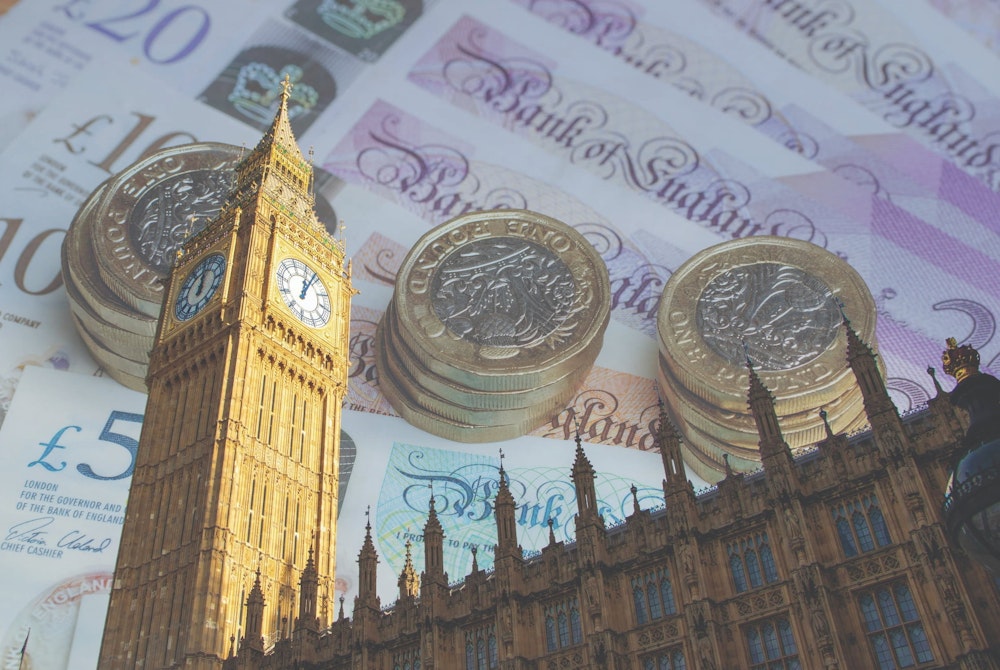
Trust in UK politics has collapsed to 70%, while foreign money buys influence on the cheap. A £1,000 donation cap could fix it - but will Labour act?
Sometime the correct policy seems obvious, yet the government has good reason for sticking with something worse.
That's the way it is with the idea of capping British political donations at, say, £1,000 per person (close to Canada's level). The reform would stop a few rich men in London from effectively buying shares in parties.
It might gradually restore some of the shattered British trust in politics. But first you would have to explain to angry Britons that henceforth they will be paying perhaps £2 a year each to fund those hated parties.
As the Lib Dem MP Martin Horwood reflected in 2011: "In the current context, I do not fancy particularly going on to the doorstep and explaining to people that their libraries are shutting and their daycare is being closed down and we may not be able to put as much on housing benefit as we used to, but good news; do not worry, we are giving more money to political parties. I think I might get a punch in the face."
Today, anyone suggesting public funding of parties might get two punches. Much easier to let those rich men pay. They're happy to do it. Nonetheless, for several reasons, this is the moment for the government to cap donations. It could be the last chance for a long time.
Charlatan
Reason number one for doing it is that trust in politics has collapsed to the point of crisis. That trust was never huge. British people have always been suspicious of politicians. Even in 1944, when the country was run by men who had volunteered for the front in the First World War, and who were working day and night under German V2s, 35% of Britons told Gallup pollsters that politicians were "out for themselves".
By 2021, in a poll by the Institute for Public Policy Research, the proportion who thought politicians were "out for themselves" reached 63%, the highest on record. By December 2023, in a poll by We Think for Byline Times asking specifically about politicians in Westminster, it hit 70%. Various other pollsters have also found trust in politics near all-time lows.
British voters could now be tempted by a Trumpian charlatan who promises to "drain the swamp". Already, they are unwilling to trust politicians with a mission as expensive and complex as, say, the energy transition. Why wouldn't ministers just use it to funnel contracts to mates and donors? After all, that's what they did in a national life-and-death moment with the Covid VIP lane.
Reason number two to cap donations is that, with the world having become a much more dangerous place, these donations are now a national security problem. It's simple for foreigners to give to British parties. For instance, they can do it through companies they own in the UK. And buying influence here is cheap. Look at Jeffrey Epstein's email exchange with Donald Trump's occasional adviser Steve Bannon about British far-right activist Tommy Robinson.
"Backbone of England", writes Bannon, implying irony through quotation marks. "That's why the pound so low," replies Epstein. "Cheap @ any price," agrees Bannon.
Whereas US politics has a "big money problem", in the UK the money is small. Total spending by all parties in the 2024 general election was £94.5million, a British record. Nigel Farage said in 2024 that Elon Musk was considering donating to Reform UK. A figure of $100million was mentioned – peanuts for Musk, but equivalent to nearly 80% of the total election spending. Musk hasn't given to Reform yet, but the mere hope of his money surely encourages far-right parties to align with his views.
Plenty of other foreigners are keen to buy stakes in British politics. There are the London-based Russian donors, many with ties to Putin's regime, who supported the Conservative Party so generously before the full-scale invasion of Ukraine in 2022 – and some even since then. Chinese money has started flowing into Westminster. And several of Labour's biggest donors are also backers of Labour Friends of Israel, notes the political scientist Patrick Dunleavy.
Reason number three for a cap is that we now have strong evidence showing a switch to public funding of parties would probably save taxpayers a fortune. The Covid VIP lane, through which the government handed contracts for medical equipment to some useless companies run by Tory donors, wasted billions. This happened because donors had bought access to ministers. In short, rich people captured a part of the state – a situation we associate with faraway countries such as South Africa or Russia.
And the final reason to cap donations now? Labour has a selfish incentive to do so. Since the party is losing popularity with donors, who expect it to be ejected at the next election, it would benefit from a cap. Although Labour took fortunes in donations when steaming to power before 2024, it will probably never become the default party for rich donors. Even in 2023, with Labour the obvious government-in-waiting, the Tories often out-raised it.
True, the short-term temptation in power is to take all the dosh that's on offer, but Labour's longer-term self-interest is to limit political spending. And Labour has promised to do so. Its election manifesto in 2024 pledged to "protect democracy by strengthening the rules around donations to political parties".
Loopholes
The Representation of the People Bill, now before parliament, does propose closing some loopholes that let in foreign and/or dodgy donors. But it leaves other loopholes open. It needs to go further and cap donations.
An eloquent prime minister could persuade voters that such a proposal is an anti-corruption measure. Passing the bill would be a rare achievement of this government – much cheaper and quicker to do than, say, reviving public services.
And if Labour neglect the problem, don't expect Prime Minister Nigel Farage to fix it.

Other relevant stories

End £30bn bank benefits, tax wealth like work, break the gas price link, launch a rooftop solar revolution and build 1.4m homes. Peoplenomics in five steps.

From King John's 1203 wool tax to the poll tax that sparked riots, 800 years of UK tax history show unfair taxes provoke revolt – and fair ones build nations.

Survation polling finds 59% of Britons back a 2% wealth tax on fortunes over £10m, while 63% say the wealthiest don't pay their fair share. Over to you, Andy.

Peoplenomics: price control, rooftop solar and tax reform put money in people's pockets – and could double UK growth. A new orthodoxy for Burnham's Labour.