



Babelfish launches Peoplenomics: four people-first policies, modelled by NIESR and CEBR, that could add £36bn to UK GDP and cut inflation. Put people first.
From King to Country: Fund UK Democracy, Not Donors

A modest cut to the Sovereign Grant could free £66m a year — enough to publicly fund UK political parties and break the grip of mega-donors. Here's how.
There is another, more radical, idea that would ensure the democratic power in Britain remains with the people and not with the privileged, big money donors.
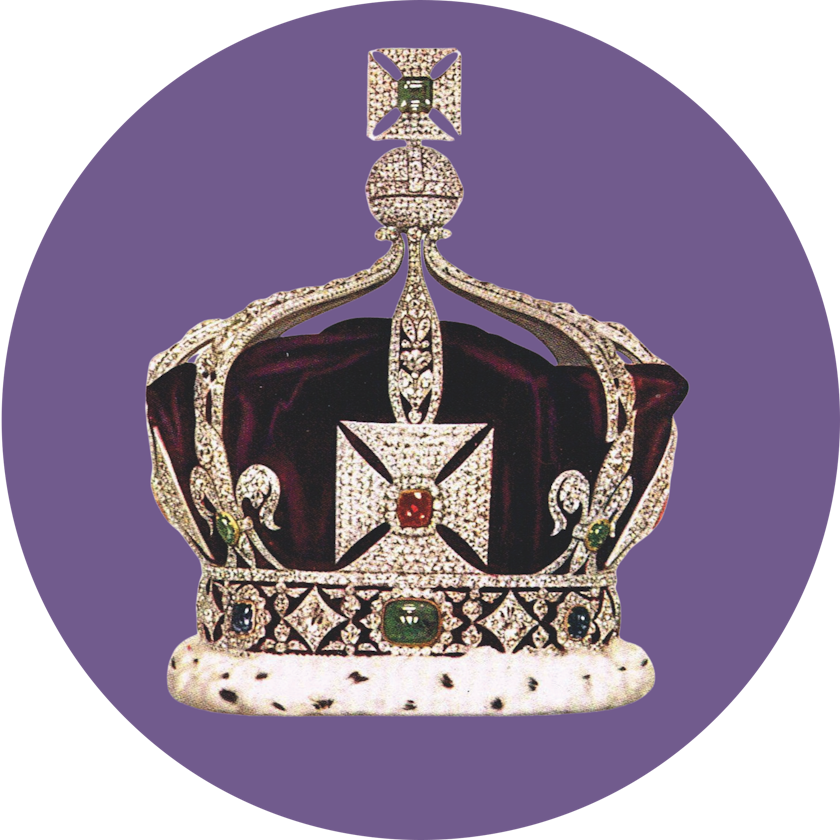
Tapping into the King's vast finances, by moderately reducing the Sovereign Grant paid to working royals from the Crown Estate, would generate enough income to secure political funding and create a fairer playing field for all.
And no, this isn't a republican suggestion to undermine the monarchy, there are solid economic and social reasons to consider it.
Research by economy and democracy analysts the Autonomy Institute has examined the £1.1billion per year of public revenue generated by the Crown Estate, of which 12% goes to fund the monarchy.
Its report has concluded that reducing the royal family's share to 6%, with the difference ringfenced as a Democracy Fund, would cover the full cost of the proposed public party funding scheme of £50million to £70million per year.
The Sovereign Grant would remain comfortably above its historical level, the legislation would be a single short amendment to existing law, and the proposal carries a strong moral justification, namely that the Crown Estate has belonged to the nation, not the monarch personally, for more than 250 years.
Monarch
When King George III ascended to the throne in 1760, he brought with him a landmark law – the surrender of the monarch's revenue from his vast hereditary lands to parliament.
The income from the woodlands, lakes, towns and seabeds was given over, to be spent on the public good, in return for a fixed annual income.
That deal remained in various forms until 2012 when the Sovereign Grant replaced it, but the principle of the money working in the interests of the people remains.
The working members of the royal family, through the monarch, now receive a percentage of the income from the £1.1billion annual revenue, determined by parliament. King Charles cannot sell the lands and they are managed independently.
The net surplus generated by the estate has been increased by recent offshore wind leasing rounds and, on 2023/24 figures, the reduction to a 6% share would unlock £66million a year. That would support a public party funding scheme of the scale being considered in this proposal without any new tax or any new draw on the Consolidated Fund.
The grant for 2025 to 2026 stands at approximately £132million.
Every five years the fixed percentage is reviewed by the Royal Trustees, namely the Prime Minister, the Chancellor of the Exchequer, and the Keeper of the Privy Purse. The rate stood at 25% during the Buckingham Palace reservicing programme.
For the change to take effect, a short amendment to the Sovereign Grant Act 2011 is required, principally to sections 1 and 6. The bill would carry financial privilege as a money bill, meaning the House of Lords would not have powers to block it.
Amendment
The next scheduled five-year review of the percentage falls in the 2026 to 2027 cycle, providing a natural legislative window. The amendment could take one of three forms.
Option one is for the percentage paid to the Sovereign Grant to be reduced, which is the solution the Autonomy Institute has described above. Setting the rate at 6% of Crown Estate net surplus would, on current figures, free roughly £66million per year. If it were set at 8% it would free approximately £44million, closely matching the cost of a £1 per voter scheme.
Even at the lower rate, the Sovereign Grant would remain higher in real terms than the Civil List ever was.
A second option is to replace the percentage with a fixed sum, indexed for inflation. This is essentially the pre-2011 Civil List model. It is politically easier to defend because it caps royal funding rather than appearing to reduce it year-on-year, and the redirected amount is the difference between the cap and the current trajectory.
The third option is hypothecation. A new clause in the Act would divert a defined slice of Crown Estate net surplus directly into a new fund, for example a Democracy Fund administered by the Electoral Commission, before the Sovereign Grant is calculated.
This avoids any direct cut to royal income and presents the change as a rebalancing of how Crown Estate revenue is allocated, rather than a reduction in what the monarch receives.
There is a risk that any change to monarchy funding would be read by parts of the press as a republican move. The hypothecation framing, in which Crown Estate revenue is rebalanced rather than royal income reduced, is the strongest defence.
Republicanism
Polling on Sovereign Grant reform has generally been more favourable than polling on republicanism itself, suggesting the two questions should be kept separate in public messaging.
Second, the redirected amount is volatile because it tracks Crown Estate profits two years in arrears. A Democracy Fund relying on this needs either a smoothing mechanism, such as a three-year rolling average, or a statutory floor underwritten from the Consolidated Fund. The existing Sovereign Grant Act already contains a cash floor to prevent the Grant falling year-on-year, and any bill would need to modify that floor.
The income from the Crown Estate is set aside for the public good. If considered in this light it becomes a patriotic idea – what could be more in the interests of the people than safe-guarding our democracy from a few wealthy individuals?
£465m Amount of donations the Conservative Party received in 21 years, with highly regulated industries, finance, gambling, fossil fuels and construction disproportionately represented.
52% Proportion of major business donations to the Tories that came from large private companies.
373 The number of companies that donated to parties and also received lucrative public contracts.
10% The percentage of those 373 companies that won large government contracts within just two years of donating to a party that subsequently held power.
£2.3billion The value of contracts won by 29 companies who donated £11million to the Conservatives during their time in office.
£138million The value of contracts won by eight corporations donating £580,000 to Labour within their first year in power.
22.3% The percentage of Labour’s pre-election donations made up by businesses in 2024 – up from 2.1% in 2019.

Other relevant stories


End £30bn bank benefits, tax wealth like work, break the gas price link, launch a rooftop solar revolution and build 1.4m homes. Peoplenomics in five steps.

From King John's 1203 wool tax to the poll tax that sparked riots, 800 years of UK tax history show unfair taxes provoke revolt – and fair ones build nations.


Survation polling finds 59% of Britons back a 2% wealth tax on fortunes over £10m, while 63% say the wealthiest don't pay their fair share. Over to you, Andy.


Peoplenomics: price control, rooftop solar and tax reform put money in people's pockets – and could double UK growth. A new orthodoxy for Burnham's Labour.