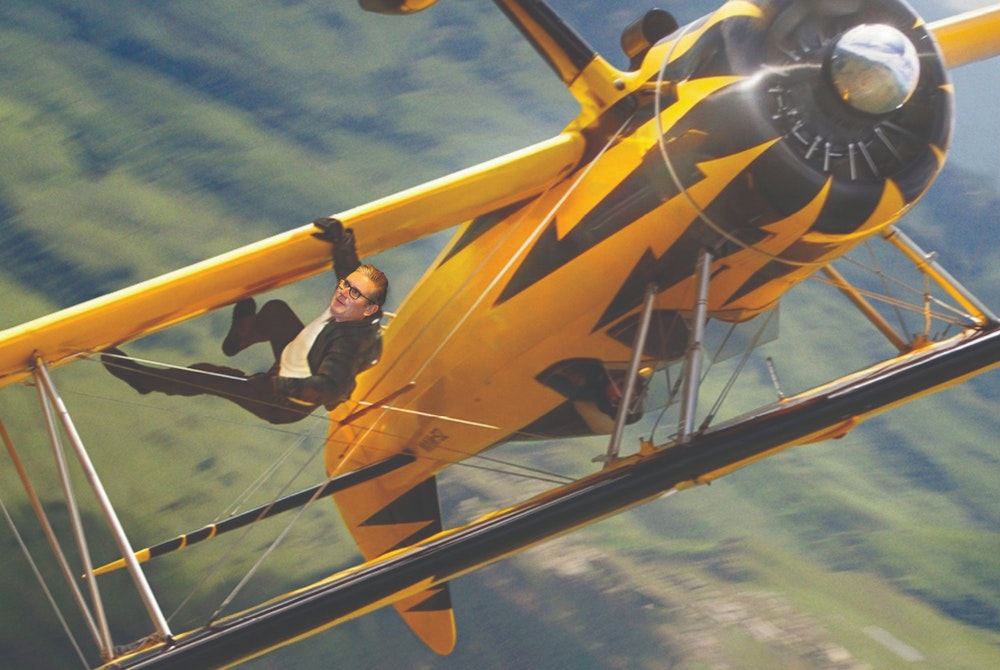




Who Do You Think You're Kidding Mr Crypto
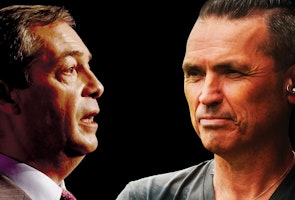
Nigel Farage says he’s on the side of British workers yet invests his riches in global crypto

"Winning is easy, son. Governing's harder." Even Hamilton – Lin-Manuel Miranda's rapping fantasy of George Washington – offers a lesson the Labour Party should probably pin above the Cabinet table. Power isn't won by performance alone. It's exercised through command.
I'm not suggesting Starmer & Company were under any illusions about the difficulty of governing an ultra-polarised Britain.
The Gorton and Denton by-election should function as a small but instructive alarm bell. Labour's instinctive response to such tremors is the familiar Westminster reflex: drift left to soothe progressive activists while nervously glancing right at Reform's prowling vote share. That is the strategic equivalent of trying to plug two leaks in a boat using the same finger.
But something else lurked in that result. Hannah Spencer the Green victor did not arrive draped in the usual Westminster theatre of ideological slogans and factional choreography. She felt oddly… human. Relatable in a way professional politics increasingly struggles to simulate. In an age when voters are highly attuned to the synthetic — the rehearsed anecdote, the algorithm-tested smile, the identity box dutifully ticked — authenticity has become the rarest currency in public life. What voters in places like Gorton and Denton appeared to respond to was something far simpler — a candidate who looked less like a Westminster trope and more like a person who might actually live down the road.
The lesson for Labour is not ideological migration but authority. Voters flirting with Green/Reform are not auditioning for a seminar on progressive purity; they are expressing impatience with a political class that looks permanently uncertain of itself. Drift left and you confirm their suspicion that Labour governs by internal committee. Drift right and you merely look opportunistic. The only viable route is conviction — the unfashionable act of deciding what you believe and governing accordingly.
And then there is the Trump problem — not simply a man but a communications weather system. When a US president cheerfully sidesteps legal conventions in pursuit of military action, the reverberations are not confined to Washington. They ripple through every allied democracy that still pretends international rules are something more than polite suggestions.
Keeping a grip on the political narrative amidst almost constant chaos and crisis caused by the man across the pond has been a challenge to say the least.
But Labour's first 20 months in office suggests a government struggling to shed the adrenaline of the campaign and take charge. And it isn't just me saying it. That perception of hesitancy, nervous energy, a leadership permanently half-explaining itself now sits at the core of Labour's communications problem.
Nervous. Jittery. Irascible. Labour's uncertain public posture has been worsened by a familiar catalogue: policy U-turns, internal theatrics and uneven attempts by both Starmer and Reeves to connect with the public.
Every sentence sounds as though it has been pre-approved by three committees, a comms adviser, and a wellbeing officer. Authority, once filtered through that many hands, emerges apologetic by default.
In an attritional environment like this, there is only one antidote: certainty.
Labour needs to project the courage of its convictions and govern for its convictions and its majority, not for opinion polls that won't matter for another three years.
"If you set out to be liked, you would be prepared to compromise on anything at any time, and you would achieve nothing." Even for those who recoil from her politics, Margaret Thatcher's warning echoes through every splutter of uncertainty from the current Labour machine.
Government as a popularity contest is a Sisyphean exercise, and the numbers bear it out. Hope not hate research shows that only 5% of the public trust politicians to tell the truth. Yet that same public increasingly says it would prioritise a "strong, decisive leader" over a "liberal democracy." This is not hypocrisy. It is exhaustion.
This is the Britain we've built: a country that distrusts politicians roughly as much as it distrusts estate agents, yet still yearns to be told what to do firmly and confidently. It's not authoritarianism so much as national fatigue. Democracy, but with a snooze button.
In this climate, indecision is fatal. So the lesson is brutally simple: stop trying to make everyone like you. Labour should stop playing the apologetic, over-cautious HR rep and start acting like the boss.
If Labour can deliver lower bills, growth people can feel, shorter waiting lists and tangible improvements in healthcare — and then make damn sure everyone knows about it — the electorate will, with a sigh, accept them as the least-worst option in 2029.
Not good enough? Then get out of politics. Get out of public life altogether. Universal acclaim, even broad tolerance, is a myth.
So, how do you achieve the realistic goal of "better the devil you know"? If Thatcher is a hard pill to swallow, look away now.
The answer, uncomfortably, lies with Donald Trump. He has turned himself and those amplifying him into the most dominant, disruptive communications channel on the planet. He has the biggest drum, and he bangs it relentlessly. There isn't a person in the English-speaking world who doesn't know how many wars Trump claims to have ended — even though he has started one with Iran he doesn't know how to finish. How many Labour achievements can even the most informed Brit reel off with the same confidence? Labour must drastically professionalise its own platforms and turn them into megaphones for success.
The same applies to its handling of the traditional media. The relationship is already antagonistic; limiting access or playing punitive games will only convert irritation into outright hostility.
The answer is performance.
Attack remains the best form of attack. And there's the rub. If Labour wants to swing momentum, it must end its crisis of confidence and usher in a politics of conviction. Less explanation. Fewer caveats. More certainty.
History, after all, has never been kind to leaders who confuse caution with wisdom. It remembers those who act — and quietly shelves the rest under well-intentioned, but sadly irrelevant.
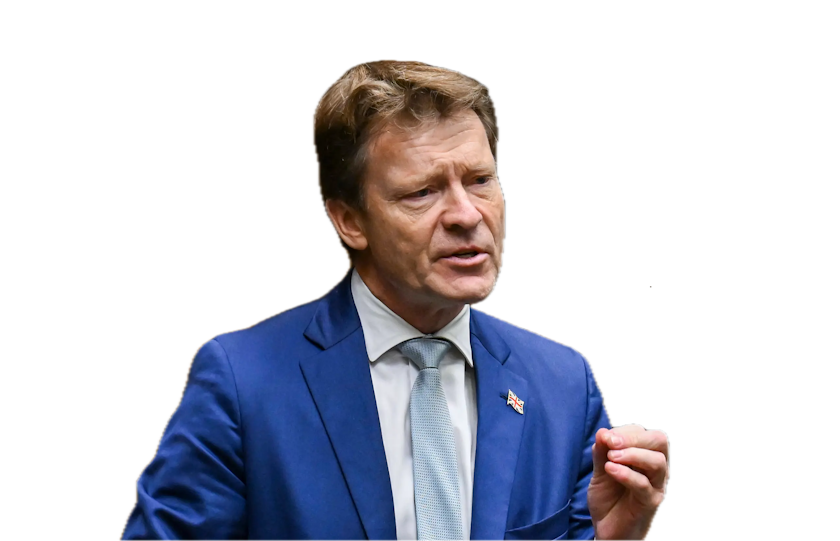
Richard Tice
Companies he leads extol the virtues of solar energy and emissions reductions and even boast of net zero building. Tice has been a green champion for 15 years – through business.
Net (not so) stupid zero is the real view of Tice we reckon – but in pursuit of power, any price. He rubbishes even the fact that we are in a climate crisis.
Shame on him!
Nigel Farage says he’s on the side of British workers yet invests his riches in global crypto
11,000 People Surveyed. Five Tribes Identified. Here's Exactly Which Reform Voters Labour Can Win Back - and How.
Farage built his brand on his Trump bromance. Now 80% of Britons view Trump unfavourably and 64% see America negatively. The relationship that once helped him is becoming his biggest liability.
There's a lot to say about Reform. A lot of gaps to talk about. Like the gap between what they say and what they do.
Net Migration Is Down 75% From Its Peak. Most Immigrants Arrive on Work Visas. So Why Does Half the Country Think Otherwise?
Be the first to hear more from Babelfish