


Who Do You Think You're Kidding Mr Crypto
Nigel Farage says he’s on the side of British workers yet invests his riches in global crypto

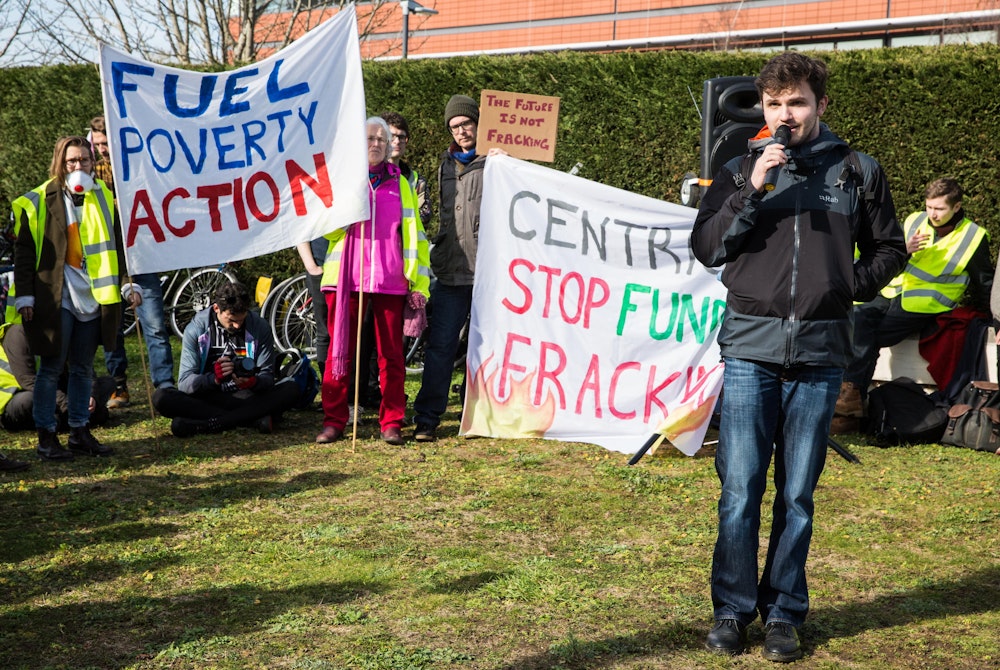
Energy bills are too high, and we have to bring them down. This winter, too many families will be forced to choose between heating and eating, while pensioners shiver in cold homes, afraid to put the boiler on. This is a national scandal.
For too long, this crisis has been treated as an unavoidable consequence of global events. This is a fallacy. The pain families feel today is the direct result of a broken energy market and a catastrophic failure of government policy. The problem is not, as Nigel Farage and Kemi Badenoch would have you believe, our investment in renewable energy. The problem is that families are not seeing the benefit of cheap renewables in their bills.
We are in the absurd and expensive position where the price of all electricity is tied to the price of the most expensive fuel – gas. Even as cheap, clean electricity floods our grid, households are still paying sky-high prices dictated by volatile gas markets. That is manifestly unfair. It compromises our energy security and fatally undermines public support for the clean energy we need.
We have the tool to fix this. When the Liberal Democrats were in government, we needed to spur massive investment in renewables while protecting the public. The solution I championed was Contracts for Difference (CfDs).
CfDs are a simple, market-based mechanism. They give a generator a guaranteed strike price, giving them the certainty to invest. But crucially, it protects consumers. If the wholesale price – still set by gas – soars above that strike price, the generator must pay the difference back, returning that money to the public, shielding them from price spikes.
The problem is only about 15% of our renewables are on this scheme. Most older projects are on Renewables Obligation Certificates (ROCs), an archaic 2002 scheme. It does the exact opposite: paying generators the high wholesale price plus a subsidy funded by levies on our bills – costing a typical household around £90 a year.
It doesn’t have to be this way. The government must rapidly move all old ROC projects onto new CfDs.
This single move would help break the link between gas and electricity prices. It would end obscene windfall profits for older generators and return that money to the public.
Breaking the gas link is a critical part of my party’s plan to cut bills by half. But only one part – there is much more we need to do too.
Investing in cheap, clean, renewable sources of electricity: solar, wind, tidal, hydro-electric. Insulating people’s homes and making them more energy efficient, so they are much cheaper to heat.
Recoupling the UK and EU electricity markets, and reintegrating emissions trading systems.
The government must stop dithering. We cannot afford this broken system. By failing to act, they are not just allowing fuel poverty to fester; they are handing a political gift to those who want to halt the transition and pursue an energy policy in the service of Vladimir Putin, instead of the British public.
We must make this change to cut energy bills for good.
Nigel Farage says he’s on the side of British workers yet invests his riches in global crypto
11,000 People Surveyed. Five Tribes Identified. Here's Exactly Which Reform Voters Labour Can Win Back - and How.
Farage built his brand on his Trump bromance. Now 80% of Britons view Trump unfavourably and 64% see America negatively. The relationship that once helped him is becoming his biggest liability.
There's a lot to say about Reform. A lot of gaps to talk about. Like the gap between what they say and what they do.
Net Migration Is Down 75% From Its Peak. Most Immigrants Arrive on Work Visas. So Why Does Half the Country Think Otherwise?
Be the first to hear more from Babelfish