


Removing VAT from energy bills and applying it to flights could cut costs for families and tackle a deeply regressive tax.
No London neighbourhood meets WHO air pollution guidelines
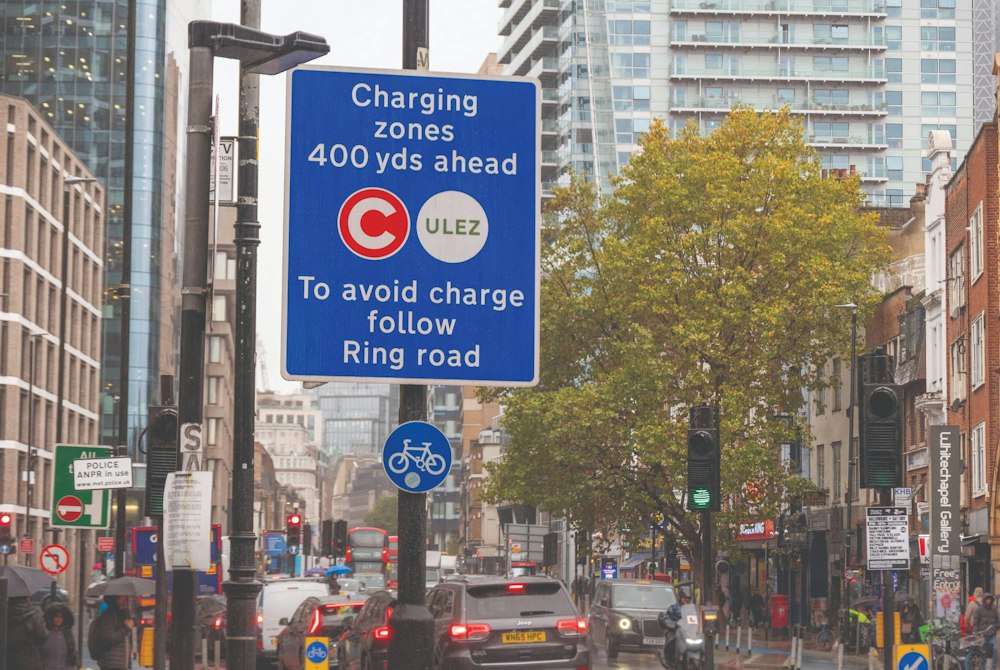
Not one London neighbourhood met WHO air pollution limits last year. Ulez has cut pollution by a third, but Camden, Islington and Westminster still lag.
No London neighbourhoods met the World Health Organisation’s target for fine-particle pollution last year, an investigation by Babelfish has found.
But almost all parts of the capital do meet the UK’s less stringent target for what is called “PM2.5” pollution – which is set at double the WHO level – except for some central neighbourhoods in Camden, Islington and Westminster.
Measures such as Ulez – the world’s largest and most ambitious clean-air zone – have helped cut pollution by around a third in five years.
London’s Ulez was first introduced in 2019 by Mayor Sadiq Khan in a bid to “clean up London’s air”.
One study found that deaths related to air pollution are down 40% over that time, while another found evidence of recovery in the lungs of London’s children.
There are separate guidelines for nitrogen dioxide (NO2) pollution. Our analysis of the latest average annual pollution-monitoring data from Defra has found that all parts of London met the UK’s target for NO2 – 40 micrograms per cubic metre – last year.
But we found that just 33 out of 1,002 London neighbourhoods monitored by Defra last year met the WHO guideline for NO2 – set at 10 micrograms. The WHO has lowered targets for air pollution to try to curb the millions of deaths it causes globally every year.
London’s cleanest air was in the south east of the city, around Bromley and Croydon.
The three worst neighbourhoods for NO2 pollution in London were all in Camden, covering the area from King’s Cross to Holborn.
The next worst were in Westminster and Islington, with another hotspot around Heathrow.
Ten neighbourhoods, all in Camden, Islington and Westminster, failed to meet the UK’s target on PM2.5 pollution – this measures tiny particulate matter 30 times smaller than the width of a human hair which can be inhaled deep into the lungs.
Dr Helen Wood, a research fellow at Queen Mary University of London, said: “I think the WHO guidelines are important because it’s been established that really there is no safe level for fine particulate matter.”
She was part of the team behind a landmark study of more than 3,400 children in London and Luton, Bedfordshire – finding that “improvements in air quality helped restore lung growth previously stunted by exposure to air pollution”.
Luton was chosen as a “control” site as it had similar traffic pollutants to the capital but no clean air zone.
Initial measurements taken before Ulez was introduced showed that children in London had “significantly smaller lungs” compared with those in nearby Luton.
Over five annual tests, the proportion of children with clinically impaired lung function fell from 14% to 9% in London, compared with a fall from 9% to 7% in Luton.
Helen said: “Ulez is the largest clean-air zone geographically as well as in terms of population and it is the strictest.”
She added: “London was in a very bad place in terms of pollution but Ulez is a step change.”
