


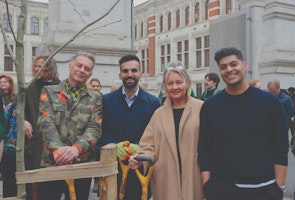
Misinformation, lobbyists and timid politicians: Chris Packham on why the climate crisis needs a war footing, and how the public can fight back.
Get chatting and texting... for the sake of beavers!
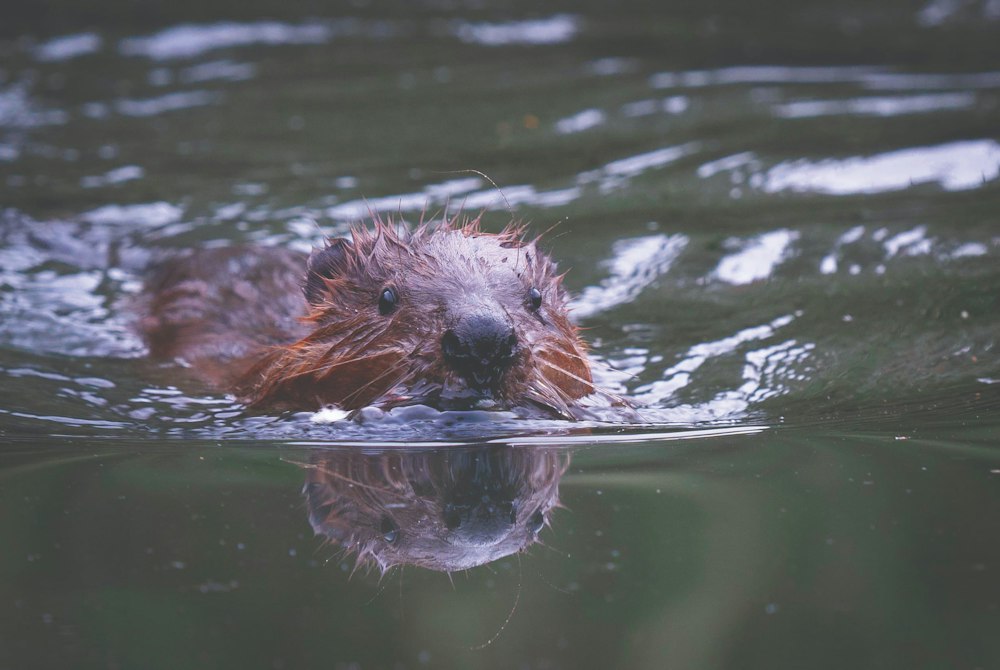
Ecotalk uses its profits to restore nature. Beavers are back in East Sussex, and a Devon field is now a thriving wetland. Every call and text helps.
Giving nature a helping hand by using a mobile phone provider that cares passionately about our planet – that’s the power of Ecotalk.
The world’s first network to use its profits to restore the environment is proud to sponsor LDN COP and help highlight the challenges the capital faces in combating climate change.
Launched by green industrialist Dale Vince, Ecotalk uses its profits to protect nature in Britain, instead of lining shareholders’ pockets.
It works closely with its Chief Ecologist, Chris Packham, to reintroduce, rewild and replant across two sites in Sussex and Devon.
Vince, who also owns Forest Green Rovers, the greenest football club in the world, said: “Ecotalk is the most sustainable phone service out there. Every time you use your phone you’ll be doing good for nature, helping to restore Britain’s natural landscapes and species.”
Ecotalk’s customer base has nearly quadrupled in the past year, helping to support the expansion of its flagship rewilding projects, where 2026 has brought encouraging signs.
At Downicary in Devon, a flat field is now a functioning wetland, with ponds, marshland plants, otters, kingfishers and beavers.
Three thousand tons of earth have been moved to create new habitats for reptiles, invertebrates and small mammals, and a 55-acre tree planting programme is under way, sourced from the Woodland Trust. Local primary school children helped Chris Packham to plant some of the 3,500 trees and shrubs.
At Bowyers Wood, beavers have returned to East Sussex for the first time in 400 years, with a family now settled and young kits born.
Nine tawny owl chicks have been ringed after two new owl boxes were occupied in their first breeding season, and surveys have found 37 bird species, including lesser spotted woodpeckers and spotted flycatchers.
Eighteen black poplars, one of the UK’s rarest native trees, have been planted. Bat surveys, carried out with bat expert Professor Fiona Matthews, have confirmed multiple species, including the rare barbastelle.
Broadcaster and campaigner Packham said: “We are in a crisis, wildlife is disappearing before our eyes, measured, quantified, analysed... beyond question.
“It’s easy to think ‘But what can I do?’ The answer is simple, you can talk and text on your phone, turn chatter into conservation!
“It’s fantastic to see London having its own COP, bringing together so many organisations and people committed to making the capital greener, cleaner and better for nature. I’m delighted to be playing a part. C’mon, let’s Ecotalk a better future for nature.”

Other relevant stories

Council spending on London parks has plunged over 15 years. A new Parks for London report says green spaces need resilience to survive and thrive.

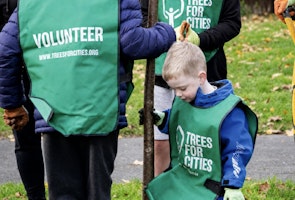
Urban trees cool streets, clean the air and cut flood risk. Trees for Cities CEO Kate Sheldon makes the case for investing in planting and long-term care.