



End £30bn bank benefits, tax wealth like work, break the gas price link, launch a rooftop solar revolution and build 1.4m homes. Peoplenomics in five steps.
Solar on UK Social Homes Would Add £5.1bn to the Economy
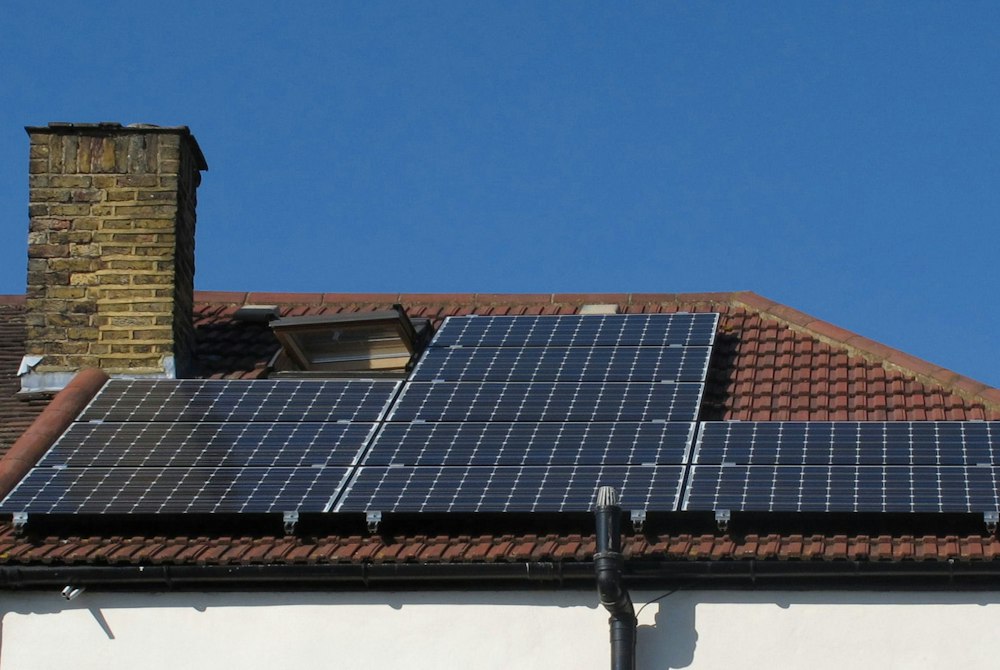
Putting solar on 1.8m UK social homes would save households £618 a year, add £5.1bn to the economy and support 7,600 jobs a year, new CEBR modelling shows.
Cash savings go through the roof!
Britain has endured expensive energy for so long it has stopped being a crisis and become a condition.
Households, businesses and public finances have been squeezed by energy costs for the best part of five years, and winter will only tighten this grip.
Energy bills climbed 17% in real terms between 2020 and April 2026 - equivalent to £236 for the average household - and the energy price cap is set to rise a further 4% from October.
The UK government counts almost 2.4million households in fuel poverty and 7.6million that spend more than 10% of post-housing income on energy bills. The country also suffers the most expensive industrial electricity of any major developed economy.
The drivers of this are structural. Britain imports almost half its gas, and gas sets the wholesale electricity price most of the time, despite generating only a quarter of our power. A cold snap in Asia or a shipping dispute in the Gulf ends up on a bill in Bolton.
There is no quick fix. But there is a significant opportunity in the form of one of the largest unused surfaces in the country, on top of Britain's five million social homes.
Delivery
A nationwide rollout of domestic solar PV systems across social housing rooftops could bolster energy generation, strengthen energy security and target benefits at households most in need. All while circumventing grid connection issues that currently plague industrial projects.
Babelfish commissioned Cebr to evaluate this exact proposition. We robustly quantified the economic, fiscal and wider impacts of a social-housing-rooftop solar rollout throughout the UK, conducting modelling at a hyper local level over five and ten-year delivery horizons.
Our modelling revolved around a deliverable, tangible scenario. It isolated around suitable social houses, excluding all flats and homes with other barriers such as roof size, orientation or shading. Over 1.8million social homes could host a solar PV system under this perspective.
This represents a 130% expansion.
The economic activity generated was captured across three layers: the installation; the supply chain that underpins it; and the spending of workers doing the rollout.
Solar PV installation alone would boost the UK economy by £2.2billion in gross value added (GVA) over the ten-year delivery timeline. Incorporating supply chains and worker spending takes this to £5.1bn. The employment story is just as striking. Over a decade, the programme would support an aggregate of 76,000 "job-years' (each a person in full-time work for a year). This equates to an average of 7,600 jobs per year.
Solar rollout could drive economic prosperity up and down the country.
Because it follows social housing stock, it targets development and activity at the disadvantaged communities that need it. The most deprived tenth of local areas in England would benefit from almost one-fifth of nationwide impacts. Nearly one-sixth of total employment opportunities flow to the tenth of areas with the highest unemployment.
If these impacts are not convincing enough, there is the energy generation itself. Rooftop solar PV systems would save the average household £618 on energy bills annually. Energy exported back to the grid would be worth a further £1.1bn over a decade.
Why are roofs still empty? Partly because of the upfront capital requirements. Also installation capacity would need to grow to deliver a programme of this scale; and because of difficulties in coordinating across a complex landscape of social housing providers.
These problems are real but solvable. The opportunity is there, the technology is proven. What is missing is the decision to act on it.

Other relevant stories

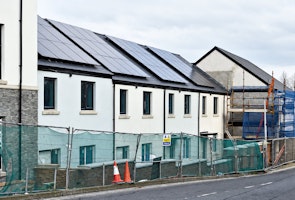
Just 7.7% of council homes in England, Scotland and Wales have solar panels, our investigation finds. At this rate, catching up will take nearly 80 years.

Housing associations sold 5,250 homes in 2024-25 as 1.3m households sat on waiting lists. Councils want first refusal to buy them back before they're lost.

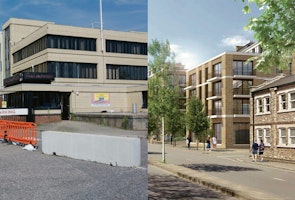
Mortlake's Stag Brewery site has permission for 1,000+ homes, yet it's been 'mothballed'. As UK housebuilding hits a 10-year low, why are we still waiting?

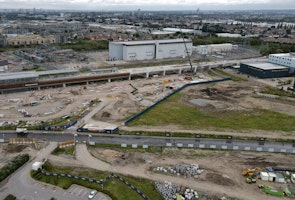
Public brownfield land could take 215,000 UK homes, with 176,000 more on mixed sites – a quarter of Labour's housing target. So why is building still so slow?