



End £30bn bank benefits, tax wealth like work, break the gas price link, launch a rooftop solar revolution and build 1.4m homes. Peoplenomics in five steps.
UK Housebuilding at 10-Year Low as Approved Sites Lie Idle
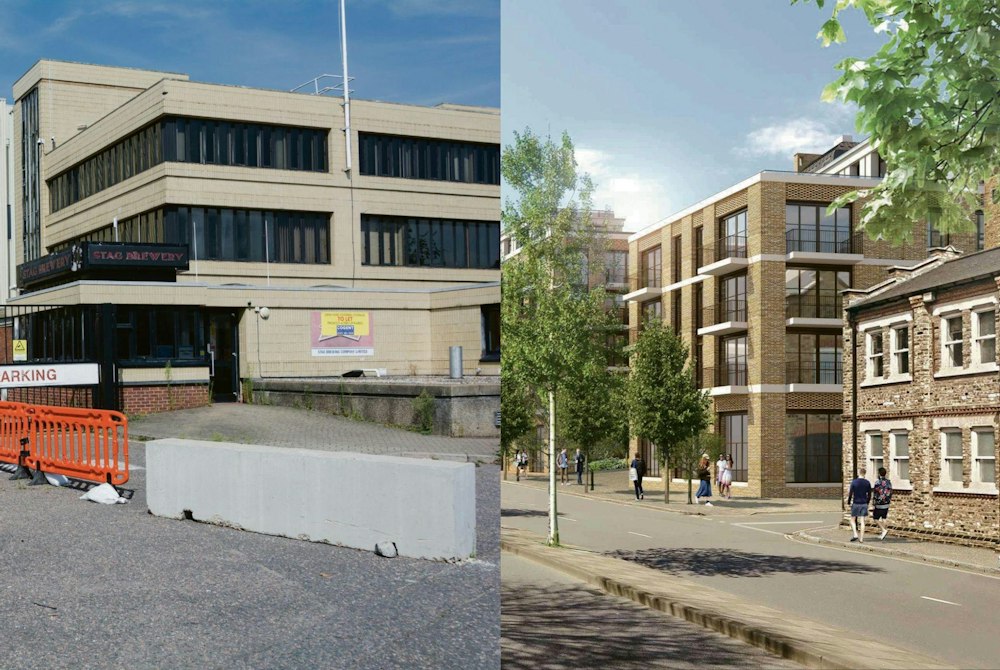
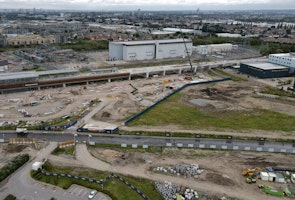
Mortlake's Stag Brewery site has permission for 1,000+ homes, yet it's been 'mothballed'. As UK housebuilding hits a 10-year low, why are we still waiting?
Life seems easy for an estate agent in Mortlake, on the banks of the River Thames in south-west London.
Close to bucolic Kew Gardens and a short walk to a busy city station, property prices average nearly £1million around the Sunday Times' "best place to live in London".
So why has a site, with permission for more than 1,000 homes at the former Stag Brewery, been reportedly "mothballed" after more than a decade of ambitious plans?
It fits the government's desire for more "quality homes in well-connected areas" and under its new National Planning Policy Framework, announced last month, there will be "a default 'yes' for homes within reasonable walking distance of well-connected stations" The Stag site, also known as Mortlake Brewery, ticks all the boxes.
Its brewing history, which goes back more than 500 years, ended when Budweiser's owner pulled out in 2015. But plans to convert this landmark were already in the pipeline.
It has been 15 years since the council set out its vision for "a mixed-use scheme that will create a new village heart for Mortlake".
The 22-acre site was bought for £157m in 2015 by a Singaporean real estate giant, City Developments Limited (CDL) through a Jersey-registered subsidiary. After years of back and forth, planning approval was finally secured last year for a £1.3bn development of more than 1,000 homes, with a 1,200-place secondary school, shops and green space.
But since then, further delay and confusion has resulted in CDL reportedly trying to sell the site but so far failing.
The Mortlake Brewery Community Group has labelled the site "effectively mothballed", adding: "This is a huge disappointment. We cannot allow this key site to lay idle."
As we have been reporting at Babelfish, the UK's biggest housebuilders are failing to produce the homes we badly need, leading to hundreds of undeveloped sites such as this, with planning permission in place.
Decades of bumper profits, rising costs and stagnant prices threaten their viability, even in prime spots.
The latest statistics show the scale of the challenge inherited. The quarterly release from the Office for National Statistics shows 171,490 new dwellings were completed in 2025/26. This is down nearly 6% on the previous year and the lowest since 2015/16. Completions by private builders numbered just 127,100, down 25% on pre-pandemic levels.
In the last edition of Babelfish, we revealed that our five biggest housebuilders are sitting on 869,000 potential plots that will take up to 20 years to build out at their current rate.
Labour has announced £39bn for a ten-year plan to deliver 300,000 affordable homes and there is some encouragement in the number of new starts - 155,650 future homes last year, up 12% on 2024.
Dr David Crosthwaite, chief economist at the Building Cost Information Service, said: "The new administration at No10 has set out an ambitious agenda. There is optimism. However, the regulatory environment needs to strike the right balance, to make it easier for private developers, housing associations and local authorities to deliver'

Other relevant stories

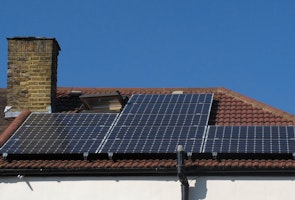
Putting solar on 1.8m UK social homes would save households £618 a year, add £5.1bn to the economy and support 7,600 jobs a year, new CEBR modelling shows.

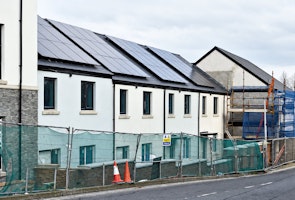
Just 7.7% of council homes in England, Scotland and Wales have solar panels, our investigation finds. At this rate, catching up will take nearly 80 years.

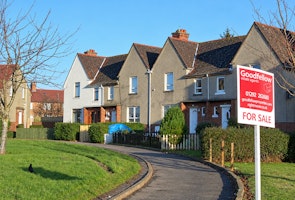
Housing associations sold 5,250 homes in 2024-25 as 1.3m households sat on waiting lists. Councils want first refusal to buy them back before they're lost.

Public brownfield land could take 215,000 UK homes, with 176,000 more on mixed sites – a quarter of Labour's housing target. So why is building still so slow?