


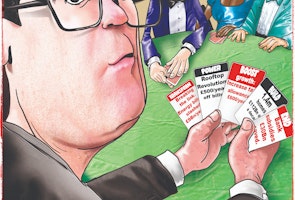
End £30bn bank benefits, tax wealth like work, break the gas price link, launch a rooftop solar revolution and build 1.4m homes. Peoplenomics in five steps.
A Vision to Transform Britain: Put People First

Babelfish launches Peoplenomics: four people-first policies, modelled by NIESR and CEBR, that could add £36bn to UK GDP and cut inflation. Put people first.
A new vision for Britain where the interests of the PEOPLE are put at the very core of economic decision-making that redresses Thatcher-imposed imbalances is unveiled today by Babelfish.
We're calling it 'Peoplenomics'. With our latest edition we launch a new economic vision, nothing less. We declare the end of Thatcher's 50-year dogma that markets know best, that private enterprise does it best – that the state should stay out of running things – that there is no such thing as society. Remember those dreadful words?
Peoplenomics makes the economic case for socialism, for a new economic order – economic policy that delivers growth, raises living standards and creates business opportunities, but does so by putting people first. We present four policies here that do this, all of them are people-based policies, all of them have been modelled by independent economists – all of them have been found to have profound impacts on our economy.
My proposals which I am laying out for Conference, could raise this year's projected GDP growth by 60% in the first year and 120% by year ten - doubling our current forecast growth rate adding £36billion to our GDP, per year. And reduce inflation by half a percentage point in the first year, which also brings down borrowing costs.
With these people-first policies we can:
Transform our economy by reforming our energy market to make it work for Britain.
Power millions of homes, with a national solar programme, sharing the benefits of the green economy with £500 off energy bills, proper returns for the public and economic growth.
Boost growth further by restoring the personal tax allowance, giving back the £600 a year stolen by the Tory freeze – and paying for it by ending the benefits system for banks.
Solve our housing crisis with a national drive to build over a 1.4million homes on brownfield sites which would help solve the chronic lack of housing and add a value to the economy of £112billion over a decade, as well as creating 370,000 jobs across the construction industry and its supply chains.
Our research is backed by independent economic analysis from the respected National Institute for Economic and Social Research (NIESR), and the Centre for Economics and Business Research. Our policies are designed to improve people's lives, create new opportunities for businesses and deliver significant economic growth – together they are worth tens of billions of pounds to our economy, but much more than that - we'll create jobs, put money back in people's hands and bring fairness back to our country.
A NIESR spokesperson said: "When taken together, the reforms raise real GDP (the total value of everything the UK produces) by 0.6% in the first year, growing to 1.2% above what it would otherwise have been by year ten. At the same time, inflation falls by 0.5 percentage points in year one, roughly the difference between prices rising at 2.9% or 2.4% a year, much closer to the Bank of England's 2% target.
"Taken together, the policies we modelled appear capable of supporting economic growth while also delivering a meaningful improvement in living standards, particularly for lower-income households. Strong results come from reforms to energy markets.
"They improve real incomes directly through lower energy costs and strengthen the supply side of the economy through lower production costs for firms. They offer the prospect of both economic efficiency and redistribution. From a distributional perspective, those on the lowest incomes benefit from the progressive energy bill pricing, the rise in the Personal Allowance, and the provision of solar panels for social homes."
NIESR concludes: "Overall, the policies are economically defensible and have the potential to boost the economy."
You might call these policies socialist; they put people first. Affordable energy, homes to live in, money in pockets. Our economic analysis shows them to be good business decisions with good economic outcomes. The very essence of Peoplenomics.
Economies are built by people – people as workers and people as customers. No business can survive without both, no economy can thrive lacking both. It's a false economy to allow or impose poverty on people – to crimp or crush their life chances and prevent them playing their full role in our economy.
If we restore the five years of frozen income tax allowances which have robbed hard-working people of 600 quid a year - we get a near doubling of growth in year one. That's how much of a false economy this tax increase by stealth is. Yes it will cost £20billion – that's £20billion we give back to the people it came from. And absurdly we save social security payments. Why do we take so much in tax from those with so little that we then need to pay them social security….makes no sense.
How do we pay for this £20billion right now in cash constrained Britain – cut benefits, not the usual ones - the ones that the richest among us receive - the banks. We pay them £30billion a year in interest on their cash piles, their deposits. We get nothing for that, they get such a massive boost to profits that we're talking about windfall taxes again and the right wing rallies to their defence – calling it unfair. Unfair is that we give them £30billion a year - end that, end the windfall tax arguments – and fund the restoration of income tax allowances and the near doubling of growth that comes with it. And have £10billion a year in change. Bish bosh.
When Tories talk about "difficult economic choices" they always mean increased taxes, or spending cuts for those with the least. There is another choice we can make, end benefits for the rich, give back to the poor – see the economy soar. Make Peoplenomics our new orthodoxy.
And we can look back, not in anger, but in relief and say – there is no such thing as Thatcherism.

Other relevant stories

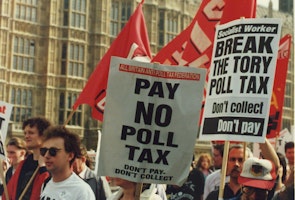
From King John's 1203 wool tax to the poll tax that sparked riots, 800 years of UK tax history show unfair taxes provoke revolt – and fair ones build nations.

Survation polling finds 59% of Britons back a 2% wealth tax on fortunes over £10m, while 63% say the wealthiest don't pay their fair share. Over to you, Andy.

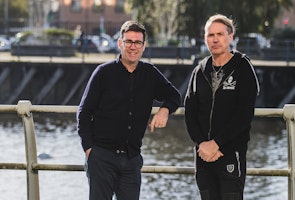
Peoplenomics: price control, rooftop solar and tax reform put money in people's pockets – and could double UK growth. A new orthodoxy for Burnham's Labour.

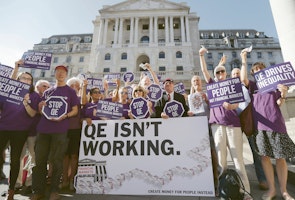
The Bank of England has paid commercial banks £100bn in interest on reserves in three years. The EU stopped doing it in 2023 – Dale Vince says Britain must too.