



Babelfish launches Peoplenomics: four people-first policies, modelled by NIESR and CEBR, that could add £36bn to UK GDP and cut inflation. Put people first.
Interest on Reserves: The £100bn UK Bank Subsidy You Fund
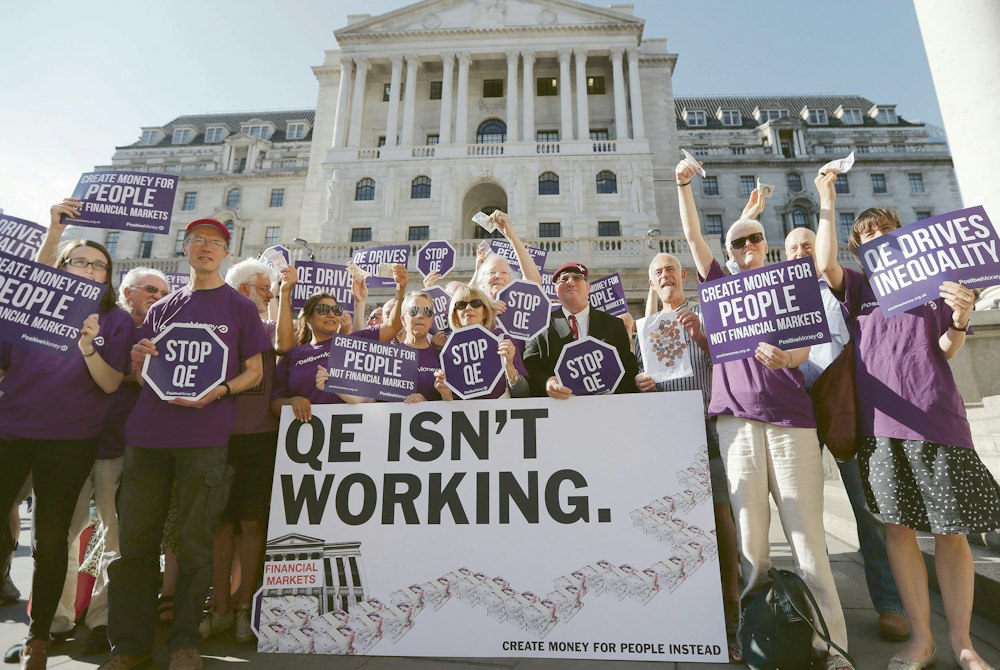
The Bank of England has paid commercial banks £100bn in interest on reserves in three years. The EU stopped doing it in 2023 – Dale Vince says Britain must too.
Stop bank benefits!
Dale Vince has urged the government to scrutinise the huge subsidies given by the Bank of England to commercial banks for holding cash reserves.
The campaigner has highlighted the little-known fact that over the last three years, £100billion of taxpayers' money has been handed over to extremely profitable banks, which between them will almost certainly rake in over £50billion in profits this year.
Vince says the practice of the Bank of England paying banks on reserves, which started in 2006, is: "Fundamentally wrong. We pay interest on reserves they have to have anyway, and it drives up the cost of borrowing since because banks can make 4% by simply doing nothing, they add a margin on top of that when they lend money.
"No wonder the banks make so much money – in a system like this they can't lose. This is a real life version of playing the Bank in Monopoly."
Central bank reserves are deposits held by commercial banks at the Bank of England. They are used to settle payment between banks.
They are also used by the Bank of England to manage interest rates through quantitative easing, a monetary policy where central banks buy large quantities of financial assets – usually government bonds – to inject money directly into the economy and lower long-term interest rates.
Lord Prem Sikka, who has authored several books focusing on corporate accountability, explained: "Since 2006, the Bank of England has paid interest on central bank reserve deposits to commercial banks.
"The interest payments accelerated in 2009 as quantitative easing took hold. As interest rates rose, payments to commercial banks increased. The EU had similar arrangements but in 2023 virtually eliminated the practice.
"The Swiss central bank also stopped paying interest on central bank reserves. The UK continues to pay massive amounts; £38.23bn in 2023, £36.33bn 2024 and £25.9bn in 2025. Billions can be freed by ending hidden subsidies to banks."
Analysis by the New Economics Foundation (NEF) revealed that the Treasury will pay out over £150billion to fund the Bank of England's interest payments to commercial banks over a five-year period from 2023 to 2028.
Experts calculated that even if the Bank of England paid interest on a smaller proportion of reserves by requiring commercial banks to hold 10% of liquid assets in reserves that pay no interest, this move alone would save the government £11billion a year. The decision by the European Central Bank to stop paying interest on those reserves three years ago was discussed within the higher echelons of the Bank of England but no changes were made to the UK's position.
NEF Economist Dominic Caddick said of the research: "At a time when millions are struggling with rising mortgage and debt costs, the Treasury are set to pay out billions in public money to fund transfers to commercial banks.
"The policy of the Bank of England paying interest on reserves was introduced in response to the financial crisis, but now we are 15 years on and in a different economic context, the government needs to change its approach.
"Public money should be spent supporting people through the cost-of-living crisis, not giving banks a huge bonus!"

Other relevant stories

End £30bn bank benefits, tax wealth like work, break the gas price link, launch a rooftop solar revolution and build 1.4m homes. Peoplenomics in five steps.

From King John's 1203 wool tax to the poll tax that sparked riots, 800 years of UK tax history show unfair taxes provoke revolt – and fair ones build nations.

Survation polling finds 59% of Britons back a 2% wealth tax on fortunes over £10m, while 63% say the wealthiest don't pay their fair share. Over to you, Andy.


Peoplenomics: price control, rooftop solar and tax reform put money in people's pockets – and could double UK growth. A new orthodoxy for Burnham's Labour.