


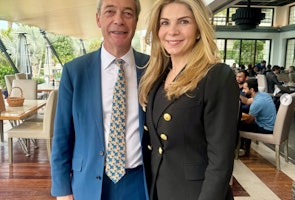
Farage promised Dubai's elite "a Reform London will remember you" - on an undeclared trip hosted by billionaires who also entertain the Tate brothers.
Sort the cost of living crisis and get real on things that truly matter to people

75% of Britons Think the Wealthy Are Getting Richer While the Poor Fall Behind. Many Reform Voters Agree. That's the Gap Labour Must Exploit.
Across the country, families are still feeling the strain of high prices, rising energy bills and wages that have not kept pace with rising costs. The latest 45,000-sample poll conducted by Ecotricity with HOPE not hate gives us a clear picture of the terrain we are operating on and of Reform UK's strengths and vulnerabilities.
First, cost of living remains the dominant public concern. Among almost every voter group, it is the top issue. The exception is Reform voters, for whom cost of living is tied with immigration, telling us that Reform's coalition is both cultural and economic.
The wider mood is bleak. Economic pressure, institutional distrust, and pessimism about the future is the oxygen feeding right-wing populism, with Reform supporters most pessimistic of all.
But the same dataset identifies that Reform's voter base is not a monolith. The modelling identifies five distinct segments that differ significantly in outlook, economic position and policy preferences and in several cases are at odds with Reform's leadership. On economics, there is a striking opportunity. Seventy-five per cent of the public agree that wealthy people are getting richer while poorer people fall further behind.
Majorities across voter groups, including parts of the Reform coalition, back reducing inequality, stronger workers' rights, and measures like taxing extreme wealth or limiting speculative foreign investment in housing.
This is where the gap between Reform's rhetoric and its policy platform becomes most exposed.
Majorities, including many Reform supporters, also accept the reality and risk of climate change, and back practical environmental regulation when it is framed around fairness, cost and local impact. The battleground is framing and demonstrating material impact, rather than whether voters care about the environment at all.
Reform's record already exposes the gap between rhetoric and reality. For example, where Labour has passed the historic Employment Rights Bill, Reform MPs have opposed stronger workers' protections, and where Labour have cut NHS waitlists to record post-pandemic levels, Reform threaten to privatise our health service.
As the party of British DOGE, Reform-led councils that campaigned on tax cuts have imposed the maximum council tax rises once in office.
The same pattern appears on immigration: concern is real, but views are conditional and pragmatic rather than absolutist. Reform's advantage comes from salience and narrative, not from an unimpeachable policy platform.
In short, across policy areas Reform is vulnerable where their leadership, their rhetoric and their policy platform are contradictory.
It is our responsibility to make clear that Labour is taking tangible action to improve lives, where Reform are peddling lies and contradictions.
There are three key takeaways. First, Reform's coalition is broad but shallow. It is unified by pessimism and distrust more than by a coherent policy platform.
Second, large parts of that coalition hold economically interventionist or pro-environment views that directly oppose Reform's leadership line.
Third, the electoral map is volatile, meaning that mobilisation of core and swing voters is central.
The route to beating Reform is not to echo its grievance politics or rely on abstract moral critique.
Our task is to reduce insecurity, rebuild trust, and prosecute the economic case with discipline.
If we can narrow the gap between people's lived experience and political promise, particularly on cost of living and economic fairness, the space Reform occupies becomes significantly smaller.

Other relevant stories

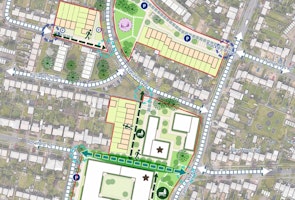
Council stock fell from 5m to 1.7m under right to buy. Just 250,000 built since 1981. Burnham promised a revival - Attlee's ghost demands deeds, not words.


To launch the latest edition of Babelfish June Sarpong interviewed Dale Vince on how to clean up British politics


Jenrick's unlawful donor favour. Farage's £5m crypto gift. £1.4bn wasted on Covid VIP lane contracts. Britain's politics is for sale. The fix costs just a bag of crisps each.

Dale Vince urges Labour to ban all private political donations. New polling shows two-thirds of Britons back a cap and pressure is mounting inside parliament.