



End £30bn bank benefits, tax wealth like work, break the gas price link, launch a rooftop solar revolution and build 1.4m homes. Peoplenomics in five steps.
Angela Rayner: build the homes or lose the land

Angela Rayner on the delayed homes penalty: developers who sit on land could lose planning permission or see sites acquired by councils.
England remains in the grip of an acute and entrenched housing crisis which has been decades in the making.
The consequences include a generation locked out of homeownership; 1.3million households on social housing waiting lists; millions of low-income households forced into unaffordable private rented housing; and more than 170,000 homeless children living in temporary accommodation.
Our economy and our public services suffer from it too. As well as blighting countless lives, the housing crisis consumes ever larger amounts of public money in the form of a rapidly rising housing benefit bill. Growth and productivity are limited by the capacity of our country's towns and cities to realise their potential.
The monumental scale of the challenge that I inherited on becoming Secretary of State for Housing, Communities and Local Government in July 2024 demanded measures that met the challenge. That is why we acted quickly to revamp the planning system and support increased housebuilding.
Affordable
Within weeks of taking office, we began overhauling the National Planning Policy Framework. The bold changes we made included restoring and raising mandatory housing targets; greater support for social and affordable housing; targeting development on brownfield land and low-quality "grey belt" land.
A better planning system lays the foundations for mass housebuilding by making the most of previously developed urban land, bringing derelict sites back into use, as well as making land available. But homes in theory must become actual homes in practice, as quickly as possible to meet housing need.
Slow build-out is of great frustration to communities that rightly expect the homes, infrastructure and services that have been promised along with planning approval to be delivered as quickly as possible. The CMA and others have concluded that most homes in England are not built as fast as they could be after permission has been granted. Often, they appear only as fast as the developer expects to sell them at local second-hand market prices. In some cases, large housing sites can end up taking decades, while working families and young people spend years deprived of a home.
While it may sometimes be in developers' commercial interests, it is not in the public interest. That's why, in government, we created a New Home Accelerator to support local areas in getting delayed and stuck sites moving and also developed an extensive plan to tackle slow build-out.
This programme of work included continued reforms to the planning system to lower risks and costs and increase the flow of land with permission, our landmark new Social and Affordable Housing Programme with £39billion funding over ten years, and encouraging large, strategic sites including more affordable housing. Where more than 40% of homes are affordable, build-out is twice as fast – so ensuring greater tenure diversity in larger sites helps deliver the homes we need, faster.
There are concerns that certain types of contracts covering land before it enters the planning system, which can be part of 'strategic' landbanks, could present a barrier to entry for small and medium (SME) developers.
As well as legislating to make options agreements more transparent, I put focus on supporting the growth of SME developers building on small sites, by tackling the key barriers they face – including timely planning decisions, regulatory burdens, the availability of suitable sites and access to finance.
Homes granted planning permission across many small sites will typically build out faster than the same number of homes granted permission on a single large site.
Greater devolution is also a huge opportunity. Local leaders should have the powers and resources to shape housing markets according to local need. That's why I boosted strategic master-planning, through new development corporations and an expanded role for mayoral strategic authorities in spatial planning. By coordinating land assembly, planning and delivery on major new housing-led developments, the public sector can de-risk development and ensure that the right infrastructure is delivered.
Genuine
We also proposed new powers for councils to keep developers on track. For the first time, we proposed housebuilders should have to commit to delivery timeframes. And while most developers want to get on and build, and in some instances viability is a genuine issue, I proposed that those who consistently fail to build out consented sites, and those who secure planning permissions simply to profit from speculative buying and selling land, could also face a "delayed homes penalty". We proposed that those deliberately sitting on vital land, without building homes they've promised, could see sites acquired by councils or lose future planning permissions.
Developers must roll up their sleeves and help in turning the tide on the housing crisis.
That means establishing a model that works for builders and communities, while also reserving the right to make last-resort interventions to unblock the homes we so desperately need. Sites with planning permission cannot be allowed to gather dust for decades while a generation struggles to access a secure home.

Other relevant stories


Putting solar on 1.8m UK social homes would save households £618 a year, add £5.1bn to the economy and support 7,600 jobs a year, new CEBR modelling shows.

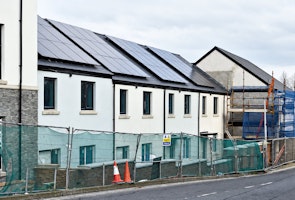
Just 7.7% of council homes in England, Scotland and Wales have solar panels, our investigation finds. At this rate, catching up will take nearly 80 years.

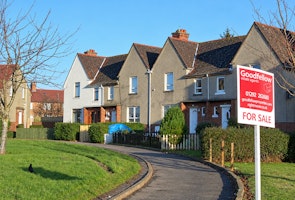
Housing associations sold 5,250 homes in 2024-25 as 1.3m households sat on waiting lists. Councils want first refusal to buy them back before they're lost.


Mortlake's Stag Brewery site has permission for 1,000+ homes, yet it's been 'mothballed'. As UK housebuilding hits a 10-year low, why are we still waiting?