



End £30bn bank benefits, tax wealth like work, break the gas price link, launch a rooftop solar revolution and build 1.4m homes. Peoplenomics in five steps.
Public backs council tax on developers' empty plots
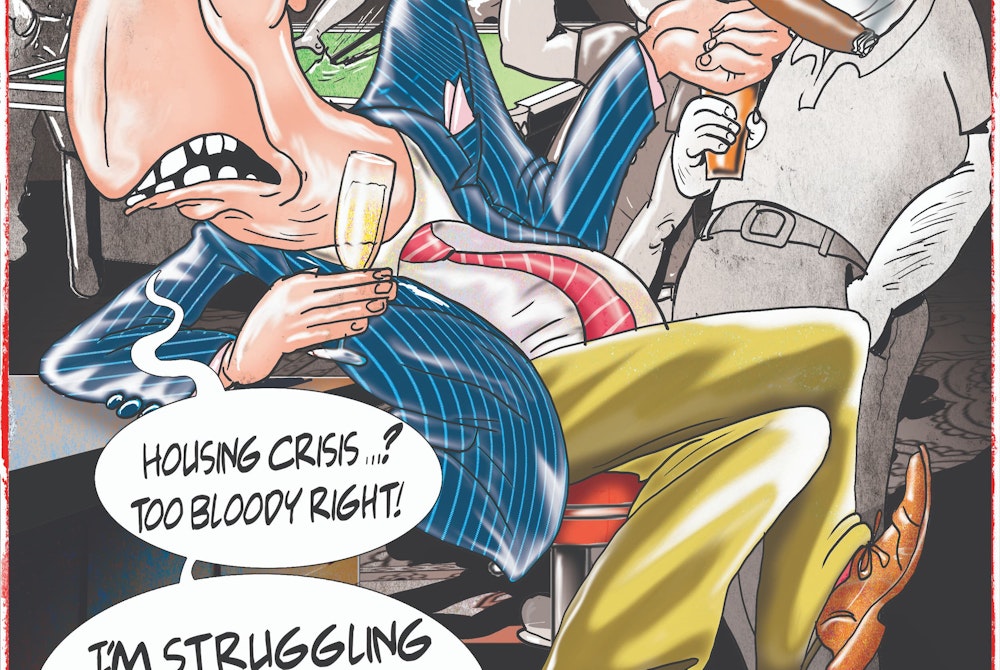
Survation polling for Babelfish finds more people back than oppose charging housebuilders council tax on consented land they haven't built on. 49% back brownfield.
The majority of people support housebuilders paying council tax on land where planning permission has been granted but homes remain unbuilt, according to an extensive survey.
Dale Vince has urged Labour to charge developers as soon as they are given the green light to build in a bid to speed up homebuilding and stop the practice of landbanking – or sitting on land until builders think they can make the most profit.
Vince believes the government must take much stronger action against builders who he blames for the slowdown in construction, which many believe will prevent Labour from hitting its target of 1.5million new homes within five years.
Nearly one-in-three surveyed support the idea of a charge, with 28% in opposition and 31% neither supporting or opposing.
What has been made abundantly clear in a Survation poll of 2,200 people is that the British public strongly backs the government in prioritising housing.
The £39billion planned investment in social and affordable housing is supported by 45%, with 17% opposing and 30% neither supporting nor opposing.
However, four-in-ten do not think the government has the right policies to hit its target of 1.5million homes, with nearly six-in-ten believing the government will fail to meet that objective in any case.
Andy Burnham's commitment to the "biggest council house building programme since the post-war period" will provide an antidote to the public's view that the government has so far been ineffective in addressing housing issues.
In fact, only 20% think the government has been effective with 45% believing it has been ineffective.
Despite right-wing politicians and the media stoking up resentment against the idea of more locally built homes within communities, more people support the idea (37%) than oppose (31%), with 26% neither supporting nor opposing.
In a boost for the ambitions of Labour's new leader, 49% of the public say that the government should prioritise social housing as a top issue, with 33% against.
And in what would be an easier win – to move faster on housing provision – the public support for building homes on brownfield sites, and especially land that has previously been developed, is at 49% with only 15% opposing, and 28% neither supporting nor opposing.
A rapid increase in housebuilding could help the younger generation by bringing down the cost of properties with greater supply and would potentially be accepted by millions, with 58% of the public believing house prices are too high; 25% about right; and just 6% too low. And while nearly six-in-ten people think lower property sale prices would improve housing affordability, more than five-in-ten people would be unwilling to accept a lower offer than the market value in order to improve housing affordability for first-time buyers.
In a clear signal that Labour is on the right track with many of its housing policies, the plan to limit the ground rent that freeholders can charge leaseholders in England and Wales to a maximum of £250 per year, is backed by 46% of people, with only 15% opposing, and 26% neither supporting nor opposing with 13% don't knows.
Proposals to increase the right-to-buy qualifying period from three years to ten years gets the support of 37% of the public, with 23% opposing, and 28% neither supporting nor opposing.
And what would be a controversial move, to put a temporary freeze on private rental prices in order to help tenants, gets the thumbs up from 44% of those polled, with 18% opposed, and 27% neither backing nor rejecting the idea.
With considerable debate about increasing capital gains tax to bring in much-needed extra revenue, the public by a margin of two-to-one would be against the move on all residential properties – but would support the action (40%) on buy to lets and (45%) on second homes.
THE FOUNDATIONS OF BRITISH HOUSING
1920s
Most property is owned by private landlords and over 80% of the population live as tenants. After the first world war, concerns about the quality of the nation's housing spur Prime Minister David Lloyd George to introduce the 1919 Housing Act and subsidies for the construction of council housing to provide "homes fit for heroes".
1930s
Significant growth in the housing sector is aided by interest rates fixed at 2% and the easy availability of materials and workers. Aerospace and automotive industries spark rapid development, with 350,000 homes built per year in the mid-decade.
1940s
After widespread urban destruction during the blitz and with money and materials in short supply, housing is identified in the 1942 Beveridge report as a cause for urgent concern. Clement Attlee's post-war Labour government adopts the proposals with mass council house building programmes between 1945 and 1949.
1950s
The Conservative government, assisted by a growing economy, continues to increase council housing construction. This hits 250,000 homes a year, mostly in towns designated by Attlee in the green belt such as Crawley, West Sussex, and Hemel Hempstead, Herts.
1960s
Post-war housebuilding peaks as 400,000 council and private homes are built in 1968. The UK now has as many owner-occupiers as tenants. Council housing begins to prioritise the tower block, raising concerns about quantity over quality, exacerbated by the 1968 collapse of a 22-storey block in Canning Town, East London.
1970s
Conservative Chancellor Tony Barber institutes his go-for-growth strategy that, together with the Bank of England's easing of credit conditions, leads to UK's first housing bubble in 1973. The price of a home doubles, and house price inflation hits 36%.
1980s
Margaret Thatcher's "right to buy" policy leads to a rapid appreciation of council homes and a new bubble. Chancellor Nigel Lawson's boom lifts prices 16% in 1987 and 25% in 1988.
1990s
The Lawson boom leads to a bust, and unemployment passes three million. Many with large mortgages have their homes repossessed. Four years of falling property prices follow.
2000s
Cheap credit and steady growth bring a sharp drop in the pace of homes being built, and rising house prices, before the 2008 financial crash. The recession then halts many building projects.
2010s
Conservative governments implement deep cuts to social housing as part of austerity policies. The legacy of the Grenfell Tower tragedy raises concerns over council building safety.
2020s
A post-pandemic jump in house prices brings an affordability crisis compounded by failures to meet housebuilding goals. Keir Starmer's Labour government introduces legislation to incentivise local building and unlock greenbelt land.

Other relevant stories

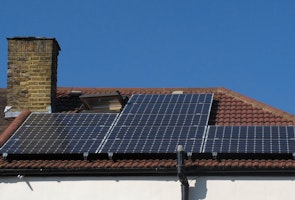
Putting solar on 1.8m UK social homes would save households £618 a year, add £5.1bn to the economy and support 7,600 jobs a year, new CEBR modelling shows.

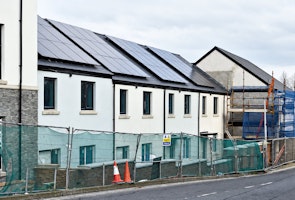
Just 7.7% of council homes in England, Scotland and Wales have solar panels, our investigation finds. At this rate, catching up will take nearly 80 years.

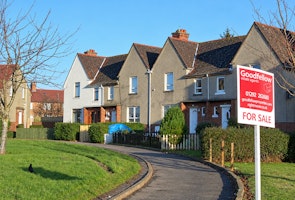
Housing associations sold 5,250 homes in 2024-25 as 1.3m households sat on waiting lists. Councils want first refusal to buy them back before they're lost.

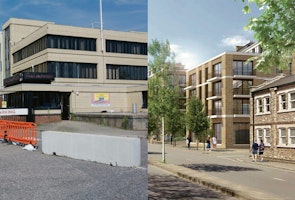
Mortlake's Stag Brewery site has permission for 1,000+ homes, yet it's been 'mothballed'. As UK housebuilding hits a 10-year low, why are we still waiting?