



End £30bn bank benefits, tax wealth like work, break the gas price link, launch a rooftop solar revolution and build 1.4m homes. Peoplenomics in five steps.
Homes for all? The £259bn case for building on brownfield
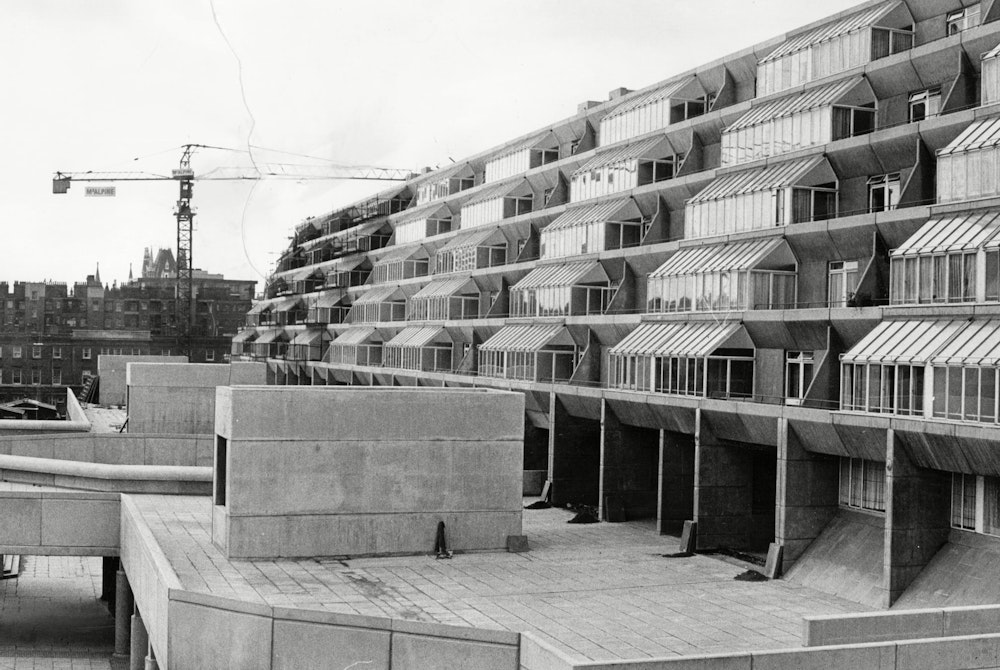
New CEBR research for Babelfish: 1.4m brownfield homes would unleash £259bn and return £1.92 for every £1 spent. The big five sit on 869,000 plots instead.
Building more social housing is an investment in the economy, not a drain – that is one of the key findings of the startling research we publish in Babelfish today.
Campaigner Dale Vince commissioned a deep dive into the brownfield sites that litter our landscape – rundown factories, abandoned garages and car parks – and asked, "Why are we not building on them?"
The answer, according to research by the highly respected Centre for Economics and Business Research (CEBR) think-tank, is that we could be doing exactly that, and more than a million new homes would be the result.
It would also create hundreds of thousands of jobs in construction and its wider supply chain – with the consequent worker spending fed back into the economy and multiplying.
Vince is calling for the incoming Labour administration to be bold, to take on the "Big Five" housebuilders sitting on masses of empty land, and make good on its promise to deliver the most ambitious council house construction programme since the post-war era.
If Andy Burnham was in any doubt as to how to sell this pledge then he should be reassured that the CEBR found that for every £1 the government spends on building social homes the economy benefits to the tune of £1.92 – an additional 92p flows back in.
Vince, who is arguing for housebuilders to pay a council tax on land where planning permission has been granted but homes have not yet been built, and which a majority of the public support when polled, said: "This is a massive opportunity, half the 1.4million brownfield homes we found are already consented, the other half will be easily so – building them all won't just ease our chronic housing shortage it will supercharge our economy. Andy's instinct and ambition is right – here's the economic evidence that it's also very much a good business decision – for the whole nation."
Based on a ten-year plan to build the brownfield homes, the CEBR findings show an economic boom of £259billion would be unleashed. The equivalent of 130,000 full-time jobs would be created in the construction industry alone each year, and a further 369,000 as part of the wider supply chain. The boost to the construction industry alone would be £89billion.
Housebuilding has stalled in Britain of late, with Labour's new homes target of 1.5million by the end of this parliament currently off-track. The waiting list for social housing now exceeds 1.3million, and a meagre average of just 7,363 new homes for social rent – either built by local councils or housing associations – have been completed on average each year for the past decade. It would take England's councils 182 years to clear waiting lists. England produced on average more than 100,000 council homes a year from the end of the second world war to the mid-1970s.
The housing benefit bill was set to hit £36bn this year – almost the same amount the government has said it will pump into new social and affordable housing over ten years. Over a third (36%) goes into the pockets of private landlords, who are set to scoop up a further £69bn in housing benefit and housing-linked universal credit over the next five years.
Meanwhile, home ownership among 25-to-34-year-olds has fallen from 59% at the turn of the century to 39% today. And with private renters now spending more than one-third of their income on rent it is no wonder there is an exodus of young talent moving abroad.
Green entrepreneur Vince is highly critical of the biggest housebuilders who are sitting on vast landbanks that could take 20 years to build out at their current sluggish rates. The five largest control 869,000 potential plots – an increase of 10% in a year – but completed just 64,000 new homes in 2025.
Based on their latest average selling price last year – and with the government planning reforms that are under way – this vast landbank could unlock £275billion worth of homes and meet more than half the ambitious 1.5million target before 2029. But at their 2025 build rates, the big five will take on average 14 years to do it.
These five firms – Barratt Redrow, Taylor Wimpey, Persimmon, Vistry and Bellway – own huge swathes of land. Barratt Redrow alone owns or controls 253,698 plots through its long-term "strategic" landbank. It completed 16,565 new homes last year, more than any other developer, but will take more than 15 years to work through its total landbank at that rate. Next is Taylor Wimpey, with a pipeline of over 20 years of building plots. Last year it completed 10,735 homes from a total land bank of 209,772.
Barely halfway through this Parliament and it is clear the target will not be met. It was always ambitious but 300,000 new homes a year has been the hope for successive governments. Last year, there were 208,600 "net additional dwellings" in England, the second annual drop in a row.
The last government that could celebrate building 300,000 new homes a year was Harold Wilson's in 1970 at a time when councils built more than two in five of them. Last year it was fewer than two in 100.
Despite challenges such as the Covid pandemic and the effects of world events on the cost of living, Britain's big housebuilders have remained highly profitable every year. Combined pre-tax profits for the big five have reached £27bn in a decade, while they build fewer homes and sit on more land.
They operate in a "speculative" market, and "buy land in advance of the construction and sale of homes, for profit, and without knowing the final price at which they will sell the homes", as the Competition and Markets Authority put it in a 2024 market study.
It means the market is "highly cyclical". Since the 2008 global financial crisis, the CMA found that "the profitability of the 11 largest housebuilders has been generally higher than we would expect in a well-functioning market". Big companies enjoyed profit margins of 20% or more before the pandemic, though these have dipped.
Housebuilders defend the landbank system as a way to ensure stability of supply. The CMA ultimately concluded that the length of time big developers held on to land was not "disproportionate" to the planning challenges. But it added that "it is likely that the amount of land being held in housebuilders' landbanks is above the level we would see in a well-functioning market".
Since then, the government's planning reforms have been welcomed as "very positive" by the Home Builders Federation. Angela Rayner, deputy prime minister and housing secretary at the time, said: "Now it's time for developers to roll up their sleeves."
But, more than a year later, those plans remain just plans. A Whitehall source said: "We will set out our next steps in due course."

Other relevant stories

Putting solar on 1.8m UK social homes would save households £618 a year, add £5.1bn to the economy and support 7,600 jobs a year, new CEBR modelling shows.

Just 7.7% of council homes in England, Scotland and Wales have solar panels, our investigation finds. At this rate, catching up will take nearly 80 years.


Housing associations sold 5,250 homes in 2024-25 as 1.3m households sat on waiting lists. Councils want first refusal to buy them back before they're lost.


Mortlake's Stag Brewery site has permission for 1,000+ homes, yet it's been 'mothballed'. As UK housebuilding hits a 10-year low, why are we still waiting?