



End £30bn bank benefits, tax wealth like work, break the gas price link, launch a rooftop solar revolution and build 1.4m homes. Peoplenomics in five steps.
Builders have stopped building. Labour can't hit its targets

Developers hold permission for 1.4m unbuilt homes while Labour's £39bn sits waiting. Whoever replaces Starmer must get tough on landbanking, not cosy up to it.
Labour entered government in spiralling housing crisis. Throughout the election campaign, Labour candidates had described the state of our housing market as a barrier to economic growth, a block on people's personal aspirations, a cause of the dropping birth rate, and a driver of social inequality.
While Keir Starmer dithered and U-turned on a host of other policy areas, on housing he and his team actually got to work. At first the signs of progress were good: £39billion was allocated to a 10-year social and affordable homes programme, designed to build 300,000 low-cost homes with more than half of those for social tenants. Social landlords were delighted; this was more money than they'd seen from any government in over two decades and gave them the confidence to get building.
Then a long-awaited and broadly celebrated new planning policy was published. It gave councils more flexibility to build in undeveloped areas, and put guides in place to get the government to its promised 1.5million new homes, of all tenures, within this parliamentary term.
Yet already the wheels are coming off. The promise of the early months has hit a giant roadblock: the state of the British economy and the turbulence of global affairs. Developers won't build, and there doesn't seem to be much the government can do about it. This matters because, due to the shrinking of the sector and multiple collapses in recent decades, the UK is heavily dependent on just five major housebuilding firms to hit targets.
EVERY single area of risk has risen for housebuilders: the cost of materials has increased, finance is harder to secure due to fluctuations on the global markets, there is a skills shortage post-Brexit and – with the cost of living rising so rapidly – demand from buyers is dipping. There is a huge pent-up appetite among first-time buyers, but mortgages are hard to secure and wages are rising slowly compared with costs.
The problem is spiralling so rapidly that by October last year, housing secretary Steve Reed and London Mayor Sadiq Khan negotiated a new deal for developers in London allowing them to reduce the quota of affordable homes included in their developments from 35% to just 20% and get higher subsidies to achieve these lower targets. The agreement was widely criticised; three London councils have now launched a legal challenge to fight its implementation.
Is the government being wooed or running scared of developers? The sight of new housing secretary Steve Reed (incidentally also a local MP in Lambeth, the council with the longest housing waiting list in the country) at last year's party conference cosying up to developers while wearing a MAGA-inspired red cap bearing the slogan 'Build Baby Build' had social housing bosses very worried. They feared the departure of Angela Rayner (a former social tenant and passionate advocate of social housing) from government had led to a shift in emphasis away from social justice towards building anything, at any cost, just to hit Starmer's overall housing targets. Even still, we won't get there.
Developers are not building because they are no longer guaranteed the huge profits they once secured in an ever-rising, highly speculative market. This is very visible in London, where most new properties are flats in medium or high-rise developments. With property values flatlining and leasehold fees a drain on household budgets, new buyers are reluctant to take on a financial commitment they can't sustain if the cost of living keeps soaring. Even the big players in the housebuilding industry are having to advertise mortgage holidays, furniture gifts, and a range of other perks just to get their new builds sold.
So where are we now? Within a month Starmer will be gone, which likely means Reed departs with him – yet the big questions facing the incoming prime minister and housing secretary remain. Builders have stopped building, and the government cannot meet its targets without them.
Landbanking is an example of this tension in practice. While economic conditions remain unfavourable for development and sale of new homes, the land on which those homes might be built continues to rise in value. The longer developers sit on that land, the greater the profit when they come to sell. Research published by the Institute for Public Policy Research in February 2025 found that developers had obtained planning permission for more than 1.4million homes since 2007 that had not, in fact, been built. The think-tank argued from this data there was clear evidence of slowing build-out rates to protect prices. Many in the industry dispute that landbanking takes place.
The specialist magazine Housing Today reported that fewer than 5% of housing permissions lapsed entirely without being built. However, the same investigation also revealed the slow speed of development: only 42.5% of permitted homes had actually been completed five years after permission for their development had been granted.
The length of time it takes to build is a huge problem in the face of an acute crisis across the whole housing market. Right now the big five housebuilders are building 64,000 homes a year – but still sitting on the potential for more than 800,000 properties.
Making the best use of that £39bn for social housing depends on developers getting moving too. Until around three decades ago, councils had more freedom and funding to build for themselves, but now most social housing is part of larger, mixed-use developments spearheaded by this handful of major builders. It is impossible for social landlords to find a way to go it alone.
WHILE she was still in government, Rayner planned to impose fines on developers who were granted permission but did not make good on that promise before her departure. It was too timid anyway: compare the risks of development with the rewards of building slowly, and the proposed £75,000 fine per 50 late delivered homes was too small to make a real difference. If the policy is resurrected, a genuinely punitive figure is needed to act as a real deterrent to sluggish development.
The government is still consulting on changes to its planning policy framework, with most measures aimed at raising density – building more homes on each patch of land, rather than looking at timeframes alone. Getting tougher on short-acting planning permissions, which expire if left unfulfilled, and 'use it or lose it' clauses, which give councils the right to strip away planning rights from sites that look to be deliberately mothballed, would have more impact.
Andy Burnham's record as mayor on securing funding and support for housebuilding in Greater Manchester, including high quotas of affordable housing, outstrips the national picture. His success has been largely put down to building a better relationship with the private sector, while insisting on protections for the public purse in return. If Burnham chooses a more active housing secretary – perhaps even returns Rayner to her old job – there is an opportunity for a new crackdown on property speculation at the cost of our national housing need.
The £39bn is enough to make a genuine change; it is more than even the most ambitious social housing leaders had expected or hoped for in 2024. Using it wisely depends on a more sophisticated and confident attitude, neither anxious nor sycophantic, when working with our big five developers.

Other relevant stories

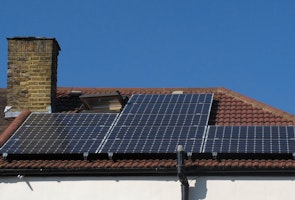
Putting solar on 1.8m UK social homes would save households £618 a year, add £5.1bn to the economy and support 7,600 jobs a year, new CEBR modelling shows.

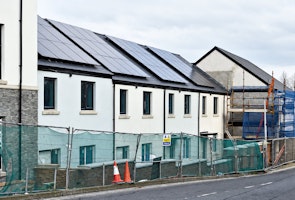
Just 7.7% of council homes in England, Scotland and Wales have solar panels, our investigation finds. At this rate, catching up will take nearly 80 years.

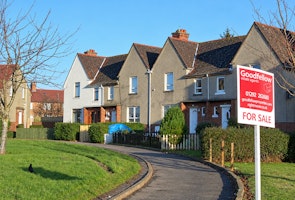
Housing associations sold 5,250 homes in 2024-25 as 1.3m households sat on waiting lists. Councils want first refusal to buy them back before they're lost.


Mortlake's Stag Brewery site has permission for 1,000+ homes, yet it's been 'mothballed'. As UK housebuilding hits a 10-year low, why are we still waiting?