



End £30bn bank benefits, tax wealth like work, break the gas price link, launch a rooftop solar revolution and build 1.4m homes. Peoplenomics in five steps.
Landbanking, not immigration, is why you can't buy a house

Five housebuilders sit on 868,922 plots worth £275bn while completions hit a decade low. Landbanking, not immigration, is why a generation can't buy a home.
If I want a massage chair with heated bum pads, I can open my pocket computer – which has more technology than the entirety of Nasa's 1960s space programme – and order it to my front door, with same-day delivery.
And I can do all this while I'm sitting on the toilet having a shit.
This is but one of the many great achievements that modern capitalism has afforded us in the year 2026.
Yet, at the same time, for some reason… I can't buy a fucking house.
For an entire generation of young people drowning in student debt, working for companies that are gambling the global economy on which AI can generate videos of Trump shitting on protesters the quickest, it's the same story. Just 39% of UK 25-34-year-olds owned their home in 2022, down from a peak of 59% in 2000.
Something has clearly gone wrong.
This left me scratching my head: why has our modern advanced economy failed to solve something as basic as housing? Building homes is a whole industry, surely they are leaving money on the table?
Well, there's a reason.
Right now, there are five companies in the UK calling themselves "housebuilding companies" which have discovered that actually the best way to make money is by NOT building houses.
"Landbanking" is a term I stumbled across a while ago as I was researching for a video I made on this topic.
Admittedly it was hard to find, buried deep behind the many Daily Mail articles, Reform members' tweets and dimly lit podcasts that told me the cause of house prices skyrocketing was Immigrants™.
Unsatisfying
This answer always felt unsatisfying, as most estimates suggest that a one-percentage point increase in "foreign born" population results in house prices increasing roughly 0-3%, with mean and median estimates below 1%.
So if the UK's foreign-born population was 6.7% in 1991 rising to 16% by 2022, while UK house prices rose from roughly £53,000 in 1991 to about £275,000 in early 2026 – a 418% increase – something definitely didn't add up.
Even taking the highest estimate of immigration's pressure on housing, while ignoring the offset immigration has on the economy through work in things like the NHS and housebuilding itself, it would only explain something like a 28% house-price effect. [mo] [statistica]
Why were so many silent about the forces behind the rest of the enormous increase, but so desperate to blame Immigrants™?
Well it all starts to make sense when you understand that the entire economic structure of building homes has become defined by a very dark logic. A logic that, if more people were aware of it, would make certain companies very unpopular very quickly. That logic being: buy land, don't build homes, let demand grow and watch as the value of that land skyrockets.
The five biggest housebuilders are sitting on over 868,922 plots in their landbank; the biggest is Barratt Redrow with a 15-year landbank worth £88billion, while Taylor Wimpey will take more than 20 years to work through their £70bn landbank. The total potential value of the homes that could be built based on the number of plots and the average selling price of each housebuilder last year is £275bn.
Despite this, there were only 142,050 new homes built last year, the lowest since 2016. A decrease of 18% since a recent peak in 2022. And down 12% the decade prior.
And all this is because they worked out a simple logic. If you own enough land to grind the entire house-building industry to a halt, demand for new homes will grow and so will the value of land.
From here you can go to investors and show them your skyrocketing portfolio. Impressed, they will invest money in your business which you can take to, you guessed it… buy more land.
A landbank is exactly what the name says: a bank of land where developers store wealth by limiting the supply of housing.
And it has meant that this quiet gang of five companies and the profits they pay their shareholders has become a key part of why my generation has been locked out of one of the most simple commodities required for basic human existence: a home.
Or it's the Immigrants™, idk.

Other relevant stories

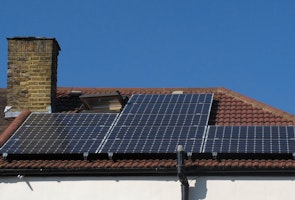
Putting solar on 1.8m UK social homes would save households £618 a year, add £5.1bn to the economy and support 7,600 jobs a year, new CEBR modelling shows.

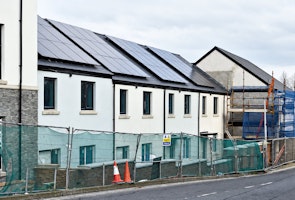
Just 7.7% of council homes in England, Scotland and Wales have solar panels, our investigation finds. At this rate, catching up will take nearly 80 years.

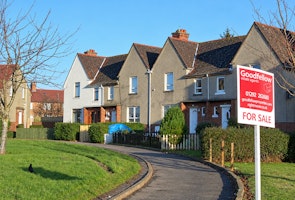
Housing associations sold 5,250 homes in 2024-25 as 1.3m households sat on waiting lists. Councils want first refusal to buy them back before they're lost.


Mortlake's Stag Brewery site has permission for 1,000+ homes, yet it's been 'mothballed'. As UK housebuilding hits a 10-year low, why are we still waiting?