



End £30bn bank benefits, tax wealth like work, break the gas price link, launch a rooftop solar revolution and build 1.4m homes. Peoplenomics in five steps.
Regeneration is key to solving the housing crisis
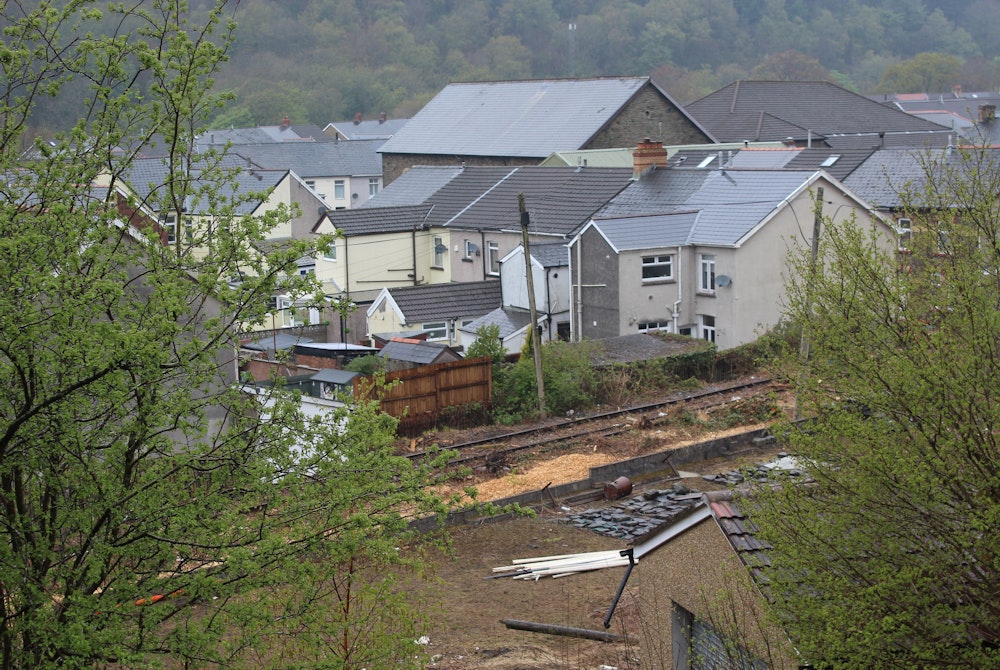
748,000 homes stand empty and brownfield sites could yield 1.48m more. Building 1.5m new homes won't be enough on its own - regeneration has to be part of it.
The government's ambition to build 1.5million new homes is welcome. More supply is clearly part of the answer. But building alone will not create the homes we need, in the places people want to live, at the pace required.
We need a broader housing strategy that includes brownfield regeneration, bringing empty homes back into use and repurposing underused sites, such as old offices and disused shops.
In fact, our analysis suggests that more than 2.5million homes could be unlocked through a combination of these ideas. Brownfield sites alone, for example old railway lines, could offer up to 1.48million homes, making it a huge opportunity if we are serious about increasing supply while protecting green spaces.
As a mutual building society, supporting a housing system that works better for renters, first-time buyers, growing families and those looking to downsize is at our core, enabling people to move as circumstances change, freeing up homes for others.
Repurposing is not new, but it is too often treated as a secondary option. But there are currently around 748,000 homes standing empty, many of which can be brought forward more quickly than new-build developments take to plan and complete.
And there are environmental benefits. Reusing existing buildings often requires fewer materials and less carbon-intensive construction. It can increase footfall, support businesses and help make places feel safer, more vibrant and better connected.
Realistic
That said, not every building is suitable for conversion, and not every project will be financially viable.
This is not about lowering standards, nor is it about converting unsuitable buildings. A realistic assessment is required of what can and should be repurposed. The same is true of brownfield sites. There are also often practical barriers to overcome.
Planning can be complex and time-consuming. Change-of-use regulations do not always reflect how towns and cities are evolving, while funding challenges can halt promising projects.
If we want more viable schemes to come forward, we need the right conditions in place. That means planning frameworks that support appropriate development, clearer and more efficient change-of-use pathways for suitable commercial properties, and targeted funding, grants or incentives.
Lending approaches also have a role to play, recognising the value of well-designed regeneration that can strengthen communities as well as increase housing supply.
No single intervention will solve the problem, but together they could help unlock more high-quality developments that benefit residents, local economies and communities.

Other relevant stories


Putting solar on 1.8m UK social homes would save households £618 a year, add £5.1bn to the economy and support 7,600 jobs a year, new CEBR modelling shows.

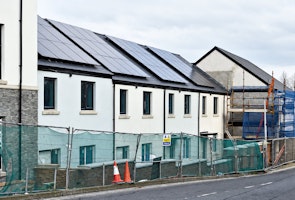
Just 7.7% of council homes in England, Scotland and Wales have solar panels, our investigation finds. At this rate, catching up will take nearly 80 years.


Housing associations sold 5,250 homes in 2024-25 as 1.3m households sat on waiting lists. Councils want first refusal to buy them back before they're lost.

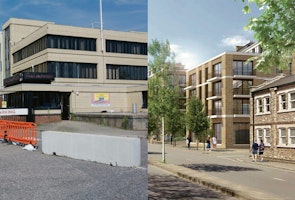
Mortlake's Stag Brewery site has permission for 1,000+ homes, yet it's been 'mothballed'. As UK housebuilding hits a 10-year low, why are we still waiting?